Find, compare and buy robots from top manufacturers

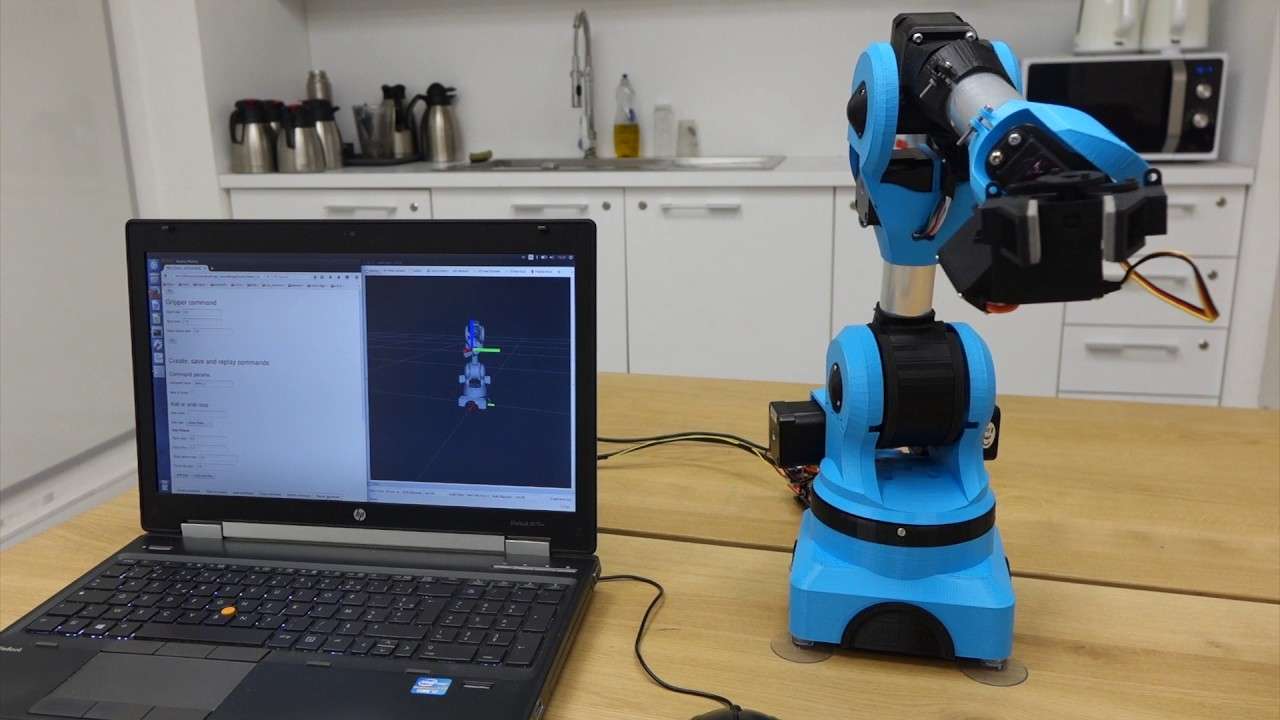
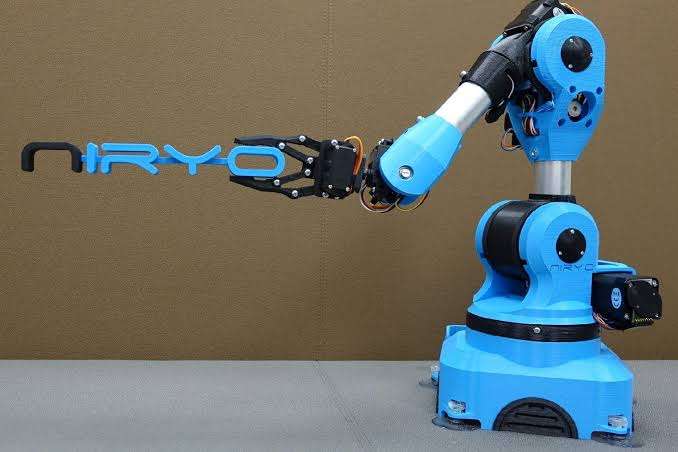
The Niryo One is a legacy open-source 6-axis educational robot arm built for robotics teaching, Blockly and Python programming, ROS learning, 3D printing, and light automation experiments.

Get quotes in 24–48 hours

Verified suppliers & secure process

Transparent pricing & guidance


The Niryo One is a compact open-source 6-axis robotic arm developed for education, makers, robotics laboratories, and accessible programming practice.
It combines a 300 g payload, 440 mm reach, approximately ±1 mm repeatability, 3D-printed and aluminium construction, Raspberry Pi 3 control, ROS, Blockly-style programming, learning mode, Wi-Fi, Ethernet, Bluetooth, and USB connectivity.
Niryo One is best suited today for legacy courses, robotics education, restoration, light pick-and-place demonstrations, and projects that specifically depend on the original platform.
As a legacy platform, Niryo One remains most relevant for existing teaching materials, restoration projects, and courses built around its original ROS-based environment.
Designed for lightweight objects, education tools, and small demonstrations.
Desktop envelope for classrooms, labs, and introductory automation.
Reproduces articulated robot-arm motion for teaching and experimentation.
Original platform used Raspberry Pi 3, ROS, and open software tools.
Supports hand-guided concepts and accessible block-based programming.
Original software downloads remain archived, but the model is no longer current.
Educational robotic arm
Robotics education and research
Indoor classrooms and laboratories
Legacy; current alternative Ned2
300 g
440 mm
Fixed desktop robotic arm
Grippers, vacuum and magnet
~0.4 m/s TCP
External power
11.1 V, 6 A; ~60 W
Niryo One Studio, Python, ROS
Position feedback; magnetic sensors
Not publicly specified
Approx. 3.2 kg


The Niryo One price should be understood as a legacy-market price, not a current official new-product price. Niryo One was originally sold as an accessible educational robot, but Niryo no longer presents a current official retail price for this model. The original figure normally reflected a particular campaign or package and should not be treated as the cost of obtaining a complete working system today. Current value depends on whether the robot is assembled, complete, functional and supplied with its controller, power equipment, cables, software, documentation and accessories. Used units may need repairs or unavailable components, while an apparently cheap unit can become expensive if proprietary parts or compatible software are missing.
For education and research buyers, support status matters as much as the purchase price. Check the operating system, programming tools, spare parts, licences and whether the seller can demonstrate the robot before payment.
You can ask Anton Robots to check availability, compare used or remaining-stock options and identify current alternatives before buying the Niryo One.
You can use Anton Robots to look for a Niryo One, remaining stock, used equipment or a current alternative. Niryo’s current product range has moved to newer Ned-family robots, while the download centre retains archived Niryo One software from 2022. Because this is not a normal current-production purchase, availability should be verified case by case rather than assumed from an old product page or archived listing. Possible sources include specialist robotics sellers, university surplus, laboratory resellers, maker communities and second-hand marketplaces.
The condition of the robot and the completeness of the package matter more than the headline price. Confirm the arm, controller, power supply, cables, gripper, mounting parts, software image and documentation before buying. Ask the seller to demonstrate homing, all joints, communications and basic movement. Also check whether software can still be installed on a current computer and whether replacement motors or electronics are available.
To start, contact Anton Robots and we can help compare the Niryo One with newer robotic arms for the same use case.
A Niryo One for sale may occasionally appear through used-equipment dealers, educational robotics resellers, laboratory clear-outs or private marketplaces, but a listing does not guarantee that the robot is complete or supported. Current Niryo stores focus on successor products, so many Niryo One offers are used equipment, old reseller stock or archived pages.
Before buying, request photos of the exact unit, serial or version information, a full packing list and a video showing calibration and joint movement. Confirm whether the controller, power supply, communications cable, end effector, software and original files are included. Missing parts can be difficult or uneconomic to replace. For professional or classroom use, also check electrical condition, mechanical play, cable wear, software compatibility and whether the seller offers any return period. Do not value a legacy robot only by its original launch price.
If you find a Niryo One for sale, contact Anton Robots before ordering and compare it with currently supported alternatives.
Anton Robots can help you request sourcing information for the Niryo One, but a conventional manufacturer quote may no longer be available. The practical options are usually remaining stock, used units, a community-built system or a current replacement model.
A useful sourcing request should state whether you need the exact Niryo One for an existing course, research project, spare-parts requirement or collection, or whether a modern arm with similar capabilities would work. It should also specify country, budget, required payload, reach, programming environment and deadline. Any quote should identify the condition, included hardware, software version, warranty or return terms, freight and support. For legacy equipment, an incomplete low-cost unit can be less useful than a more expensive tested package.
Anton Robots can compare the available route with newer robotic arms so the buyer understands the trade-off between exact legacy compatibility and long-term support.
A complete Niryo One package should include the arm, Raspberry Pi-based controller, power supply, cables, software image and the selected Niryo tool. With a legacy robot, package completeness is critical because individual parts, old software images or special cables may be difficult to source later. Before buying, ask for a written packing list and confirm whether the offer includes:
Also check whether the software can be downloaded legally, which operating systems are supported, and whether calibration files are tied to the individual robot. If the system is sold as-is, request a demonstration before shipping. Two listings with the same model name can have very different practical value: one may be ready for classroom use, while another may be an incomplete project.
You can ask Anton Robots to review the package and compare a current replacement before buying.
The Niryo One was specified with a payload of 300 g and a reach of approximately 440 mm. The published repeatability was approximately ±1 mm, with Niryo positioning the platform primarily for education rather than robust production. These figures position it as a small educational or desktop robot rather than an industrial production arm.
The payload must include the gripper or tool, adapter and object being moved. Age, mechanical wear, printed parts and calibration can reduce practical performance, so a used robot should be tested with a conservative load. Reach also describes the maximum envelope, not every usable pose with every tool orientation. For teaching, demonstrations and light experiments, the published capacity may be enough. For reliable machine tending, heavy parts, high cycle rates or precise production, a current industrial robot is likely to be a better choice.
You can contact Anton Robots to compare the Niryo One with modern arms based on payload, reach and support requirements.
A used or remaining-stock Niryo One may be shipped internationally, but availability and shipping support depend entirely on the seller. Legacy robots often move through private sales or surplus dealers rather than a current authorised distribution network.
Before paying, confirm packaging, insurance, voltage, battery or power-supply restrictions, customs classification, duties and who accepts responsibility if the unit arrives damaged. Robot arms should be immobilised correctly to protect joints, printed structures and cables during transport.
Original packaging is a major advantage. Ask the seller for current photos, operating video and the packed dimensions and weight. International freight can exceed the value of a small educational robot, particularly if the package is incomplete or sold without return rights. Anton Robots can help compare the landed cost of the Niryo One with a supported alternative available closer to the buyer.
The Niryo One should not be treated as a normally stocked current-production product. Niryo lists archived downloads for Niryo One but does not present it as a current product in the same way as Ned2 and newer systems. Any unit advertised as new should be checked carefully to determine whether it is genuine unused stock, a rebuilt unit, an old distributor listing or an unavailable catalogue page. Availability may change from one seller to the next, and there is no reliable global delivery time. A seller should confirm possession of the exact unit, package contents, condition and dispatch date before accepting payment. For a used robot, ask whether it has been tested, calibrated and reset for a new owner.
If the project has a fixed teaching term or research deadline, relying on uncertain legacy stock can create unnecessary risk. A current robot with active software and spare-parts support may be easier to deploy.
You can request an availability check through Anton Robots and compare current alternatives.
A legacy Niryo One will usually not carry the same manufacturer warranty as a current new robot. Any protection depends on the individual seller, remaining-stock terms, refurbishment work and local consumer or commercial law. Archived software remains available, but buyers should not assume the same commercial support, warranty or update path as a current Niryo robot.
Before buying, ask whether the seller provides a return period, functional guarantee or support for setup. Confirm access to motors, controllers, printed parts, cables and software.
Also identify who can repair the robot if a joint, board or power supply fails. Community documentation can be valuable, but it is not the same as guaranteed technical support. Schools and businesses should avoid assuming that an inexpensive used arm will be easy to maintain. Downtime, obsolete software and missing parts can outweigh the purchase saving. Anton Robots can help compare the risk of a Niryo One purchase with the warranty and support available on current educational robot arms.
The Niryo One can still be worth buying for an existing Niryo One curriculum, legacy ROS project, restoration, demonstration or low-cost educational experiment, especially when the exact model is needed for an existing course, research reference or restoration project. Its value is strongest when the unit is complete, inexpensive, demonstrably functional and supported by the files or software required for the intended work. It is less attractive for a buyer who needs dependable production, current cybersecurity support, guaranteed spare parts or a robot that must work immediately with modern software. For a new classroom, the newer Ned2 offers current hardware, software, documentation and warranty, although at a different price level.
Before buying, compare the total cost of the unit, repairs, accessories and setup time against a current educational arm. A modern alternative may offer better documentation, warranty and programming support even if its purchase price is higher. For a well-defined legacy or learning project, the Niryo One may be interesting.
For operational automation, compare newer robotic arms through Anton Robots first.
Yes, the Niryo One was designed primarily for education, makers and robotics experimentation. Niryo designed it as an accessible open-source, 3D-printed arm with learning mode, block programming, Raspberry Pi, Arduino elements and ROS.
It can help students understand joints, kinematics, motion sequences, end effectors and the relationship between mechanical design, electronics and software. The strongest educational use is a supervised laboratory where instructors can manage setup, calibration and maintenance. Legacy software and hardware limitations should be included in the lesson plan rather than hidden from students.
Check that the required applications can still run on available computers and that safety procedures are documented. For a new classroom purchase, compare the time required to restore and support the Niryo One with the teaching resources supplied by a current platform. A legacy robot can be a good engineering project, but may be a poor plug-and-play classroom tool. Anton Robots can help compare educational arms based on curriculum, programming level, payload and long-term support.
The Niryo One was programmed using NiryoStudio 1, block-based programming, Python APIs, ROS and the archived Niryo One software image. The available workflow depends on the exact hardware revision and the software files supplied with the robot.
Because the platform is no longer a normal current product, buyers should verify downloads and compatibility before purchase. Ask whether the seller includes the correct firmware, desktop application, source code, drivers and calibration information. Check the required operating system, USB or network interface and whether community repositories are still accessible.
An old demonstration video does not prove that the same setup will install cleanly on a modern computer. For research or teaching, legacy software can still be useful, but the buyer should be comfortable troubleshooting dependencies and maintaining a dedicated computer image if necessary. If modern APIs, ROS 2 or supported classroom software are essential, compare the Niryo One with a current robot before buying through Anton Robots.
The Niryo One can perform light pick-and-place demonstrations when the object, gripper and motion remain within its small payload and working envelope. It can move components between known positions, demonstrate sequencing and support simple educational conveyor or vision experiments. Performance depends on the condition of the robot, mechanical play, calibration, gripper and part presentation.
It should not be expected to match an industrial arm for repeatability, cycle time, duty cycle or long-term reliability. Random bin picking would require additional vision, lighting, software and integration that may exceed the practical value of the platform. For a classroom exercise or prototype, the Niryo One can be useful. For production, customer delivery or unattended operation, a current supported robot is safer. Always test with the actual part and keep payload margin.
You can compare current robotic arms through Anton Robots if pick and place is the main buying goal.
The Niryo One should not be positioned as a current industrial production robot. Niryo explicitly described the arm as educational and not designed for reliable 24/7 dusty production. It may reproduce basic industrial motions for teaching, prototyping or a controlled proof-of-concept, but that is different from delivering qualified cycle time, uptime and safety in a factory. Industrial deployment normally requires documented repeatability, duty cycle, environmental limits, machinery compliance, spare-parts support, risk assessment and an integrator responsible for the complete cell. Legacy educational platforms rarely provide the same assurance.
If the task involves machine tending, continuous assembly, hazardous tools or customer production, choose a current industrial robot sized for the process. The Niryo One is better reserved for supervised learning and experimentation.
Anton Robots can help translate the demonstration task into requirements for a supported cobot or industrial arm.
The best alternative to the Niryo One depends on why you are considering it. Niryo Ned2 is the direct modern educational successor, while myCobot and other compact arms may suit different budgets and programming ecosystems. For a new purchase, compare payload, reach, repeatability, programming environment, included tools, documentation, warranty and the amount of assembly required. A low-cost kit may suit makers who want to understand every mechanical and electronic subsystem. A finished educational arm is usually better for classrooms that need rapid setup. A certified cobot is more appropriate when the goal is real manufacturing automation.
Do not replace the Niryo One solely by matching the number of axes. The surrounding software, controller and support model determine how useful the robot will be. Create a short list based on the actual lesson or task, not on appearance.
You can contact Anton Robots to compare current robotic arms and identify the closest practical replacement.
A usable Niryo One setup may require more than the arm itself.
Before operating a used or rebuilt unit, inspect fasteners, cables, printed parts, joint play, power supply and emergency shutdown arrangements. Calibrate the robot at reduced speed and keep people outside the moving envelope until motion is predictable. A small educational arm can still pinch fingers, drop tools or move unexpectedly. Third-party grippers and modifications can change payload, balance and software behaviour. Document every change and do not assume old community instructions are complete or safe for the exact revision.
If the required accessories or software are missing, compare the restoration cost with a current complete package. Anton Robots can help review the parts list and alternatives before purchase.
Tell us what you need. Our experts will help you find the right robot for your business.
Browse Robots
Humanoid Robots
Robot Dogs
Robotic Arms
Cobots
AMR Robots
AGV Robots
Service Robots
Companion Robots