Find, compare and buy robots from top manufacturers
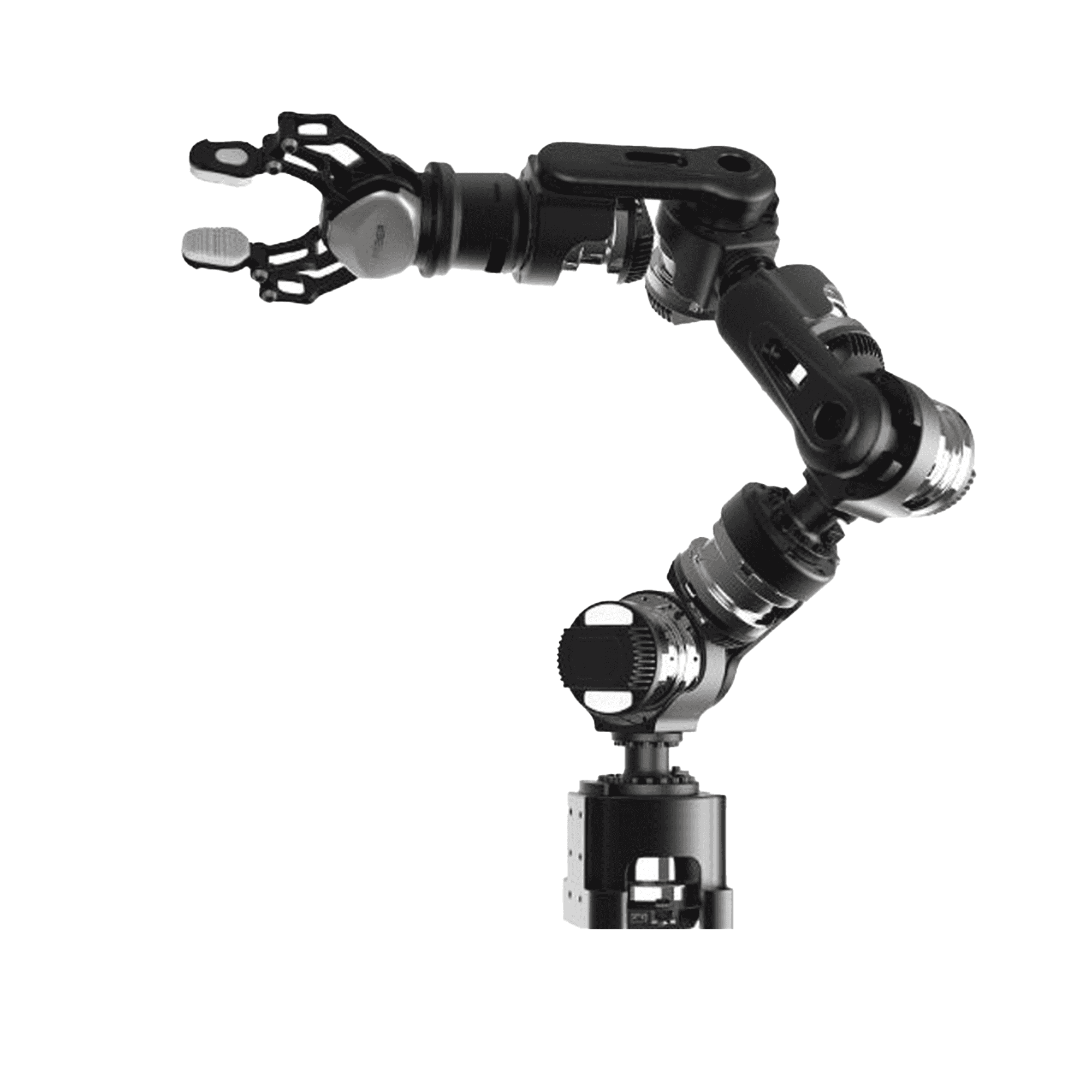
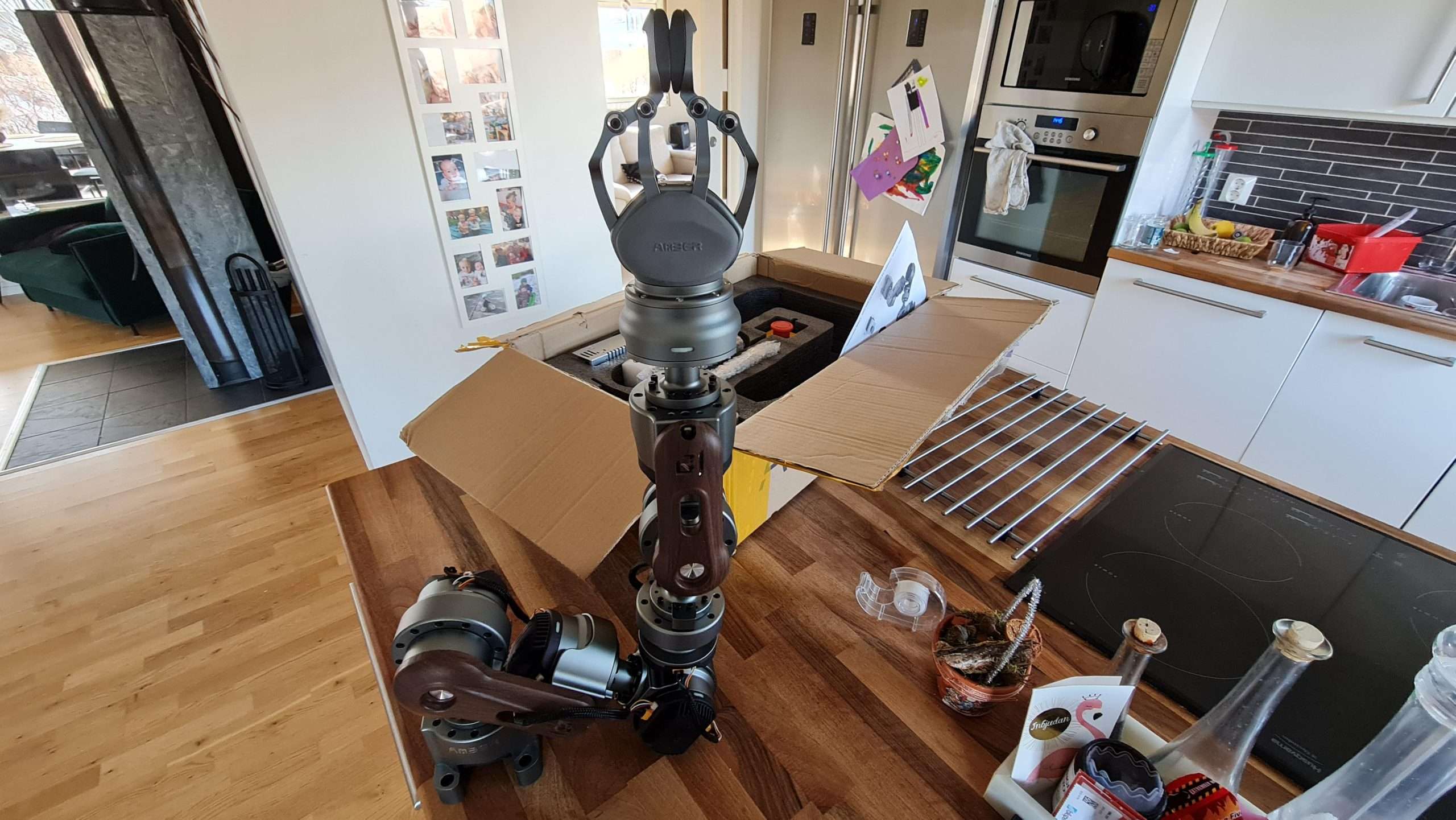
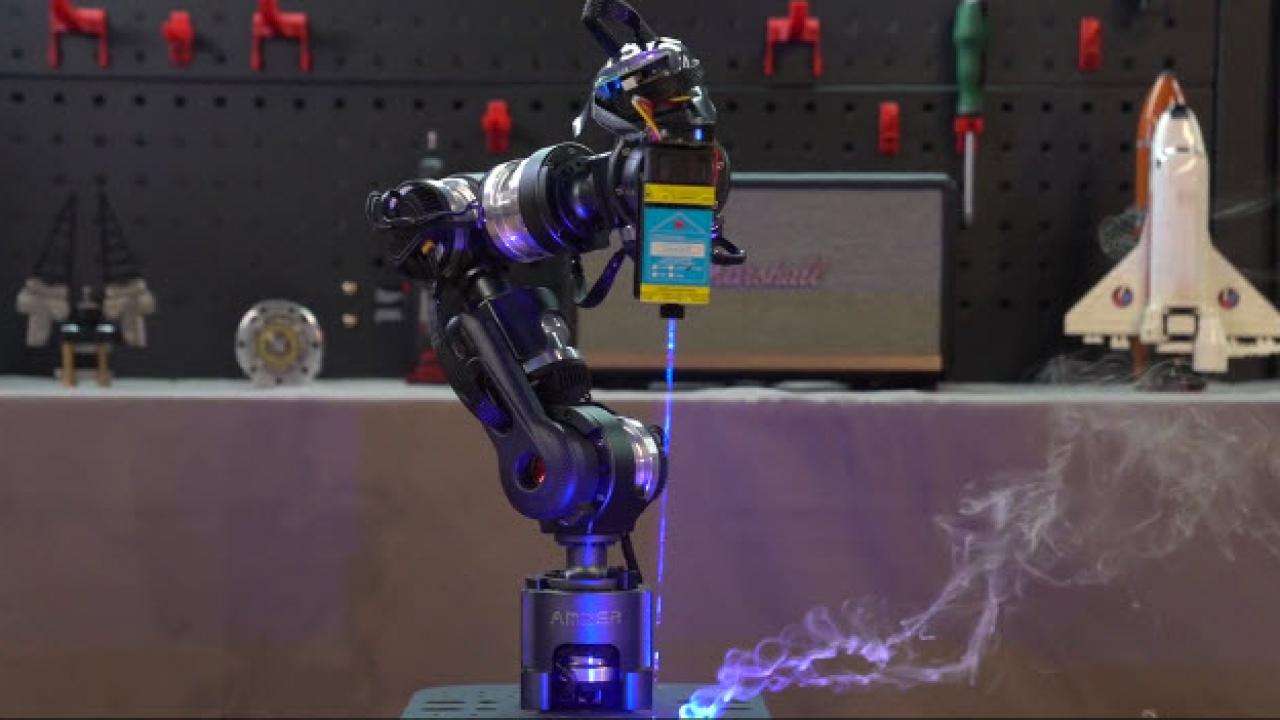
The Amber B1 is a seven-axis developer robot arm built for research, education, AI manipulation, teleoperation, prototyping, and custom robotics projects.

Get quotes in 24–48 hours

Verified suppliers & secure process

Transparent pricing & guidance


The Amber B1 is a seven-degree-of-freedom robot arm designed for robotics development, education, AI manipulation, teleoperation, and custom research applications.
Published documentation describes a compact 8 kg arm, approximately 3 kg payload, brushless servo joints, Ethernet communication, flexible mounting, and web-based or developer-oriented control tools.
The B1 is best suited for laboratories, universities, startups, and developers that need an accessible articulated arm rather than a fully integrated industrial production robot.
The B1 is primarily a developer platform, with its seven-axis motion and developer-oriented control tools offering flexibility for experimentation but requiring more system development than a turnkey industrial robot.
Provides redundant movement for research and flexible manipulation paths.
Suitable for light grippers, objects, sensors, and prototypes.
Compact mechanical platform for labs, benches, and research rigs.
Supports developer integration and networked robot control.
Articulated actuation for smooth research and education workflows.
Documentation supports plane, tilted, and suspended mounting orientations.
Collaborative robot arm
Robotics R&D and prototyping
Indoor controlled spaces
Fixed; flat, tilted or suspended
3–5 kg, configuration-dependent
581 mm (original B1 specification)
Fixed robotic arm
Interchangeable grippers and modular end effectors
180–300°/s joint speed
Externally powered
24–28 VDC
AMBER Robot Studio + ROS 2
Modular actuator position and torque feedback; exact inventory depends on configuration
Overall envelope depends on pose; 581 mm reach
8 kg


The Amber B1 price does not have one dependable global retail figure. Current cost depends on whether new stock remains available, whether the offer is developer inventory or a used system, and which controller, gripper, software, accessories, documentation, warranty, and support are included. Older launch prices or reseller pages may describe a different hardware revision and should not be treated as the current delivered price.
Buyers should also budget for freight, taxes, import duties, mounting hardware, integration, spare parts, training, and any software or safety work needed for the intended application. With a developer platform, missing cables, licences, firmware, or technical support can matter more than cosmetic condition. Before purchasing, ask for the model revision, serial number, package list, warranty position, and proof that the system powers on and communicates correctly.
You can request a Amber B1 sourcing quote through Anton Robots to check current availability and compare the complete package.
You can request sourcing help for the Amber B1 through Anton Robots. Current availability should be confirmed because offers may include new developer stock, older inventory, demonstration units, used systems, or different hardware revisions rather than one standard retail package. The Amber B1 may also be found through Amber Robotics, specialist robotics sellers, research-equipment suppliers, and the secondary market, but not every listing includes the same controller, gripper, software access, cables, licences, or support.
Before buying, confirm the exact revision and complete package. Ask whether the system is operational, whether firmware and development tools remain accessible, who handles warranty or technical support, and whether spare parts can still be obtained. For university and R&D buyers, software compatibility and documentation can be as important as the arm itself.
You can request a Amber B1 sourcing quote through Anton Robots to compare availability, package completeness, delivery, support, and suitable alternatives.
You may find the Amber B1 for sale through Amber Robotics, specialist robotics suppliers, research-equipment dealers, older distributor inventory, and the used market. Availability can vary by country and hardware revision, so buyers should not assume that every listing represents a current, factory-supported new unit. Verify the exact model, controller, gripper, firmware, software version, cables, power supply, documentation, and development access before purchasing.
For a research arm, missing software or an unsupported interface can be more limiting than cosmetic wear. Ask the seller to demonstrate communication, joint motion, homing, end-effector operation, and any included APIs or ROS packages. Also check warranty status, spare parts, freight, taxes, and who can help if the arm arrives with a fault. A complete tested package is usually safer than the lowest visible price.
If you are looking for an Amber B1 for sale, contact Anton Robots and we can help compare the available package with supported alternatives.
Yes. You can request a Amber B1 quote through Anton Robots. A useful proposal should describe more than the robot name and a headline price. It should identify the exact model or revision, condition, payload, reach, controller, software, cables, teach interface, included end effector, mounting hardware, delivery assumptions, warranty position, and available support.
For developer or limited-availability equipment, ask whether the system has been tested and whether commissioning, training, licences, spare parts, and integration are included or separate. The quotation should also be based on the real application: part weight, tool weight, required reach, cycle time, mounting position, environment, safety needs, and communication with other equipment. A cheaper arm can become the more expensive project if key components or engineering work are omitted.
Anton Robots can help compare the complete package, identify gaps, and assess whether the Amber B1 or another robot is the safer fit for your budget and use case. This is especially important when comparing a current product against older or incomplete listings.
A Amber B1 package should be checked against a written packing list. For a developer platform, confirm the hardware revision and software access as carefully as the physical parts. Before buying, confirm whether the proposal includes:
Also ask whether the arm and controller are matched, which software version is supported, and whether the equipment has been tested as one system. Grippers, vision, mounting hardware, safety equipment, commissioning, training, and integration may be separate even when they appear in product images. For used equipment, obtain serial numbers and proof of operation. For a current product, confirm who supplies and supports every optional component. Two offers labelled Amber B1 can therefore represent very different levels of readiness and total cost.
You can request an itemised Amber B1 package through Anton Robots to compare the robot, controller, accessories, delivery, warranty, and support before purchasing.
Published Amber B1 documentation lists a 3 kg payload for the Bionic-1 platform. The arm itself is listed at approximately 8 kg and uses seven degrees of freedom.
Buyers should be careful with other public figures because product pages, launch material, and documentation revisions may not describe the same configuration. A single dependable maximum-reach value is not always presented consistently in public summaries, so use the mechanical drawings and workspace diagram for the exact revision rather than estimating from photographs. The 3 kg payload must include the gripper, fingers, adapter, sensors, cables, and object, and allowable motion can change with centre of gravity, extension, and speed. Published repeatability figures also vary across documentation versions, making confirmation important for precision tasks. Ask the seller for the exact model revision, datasheet, and test results.
You can request Amber B1 configuration help through Anton Robots before relying on a specification for your application.
The Amber B1 can usually be shipped internationally, subject to seller availability, destination, export rules, freight capacity, customs requirements, and the condition of the equipment. Robot arms should be packed securely because impact, moisture, unsupported joints, or poor restraint can damage reducers, brakes, encoders, connectors, and covers. The quotation should state whether professional crating, insurance, lift-gate delivery, customs documentation, and local transport are included.
Buyers may also need to pay freight, import duties, VAT, GST, brokerage, and unloading costs. For used or older systems, confirm that the controller, cables, teach device, and accessories are packed with the matched robot and clearly identified. Batteries inside controllers or pendants may create additional transport requirements. Before shipment, request photographs, serial numbers, a packing list, and evidence that the system has been tested.
If you need the Amber B1 shipped internationally, request an international quote through Anton Robots so the landed package, customs responsibilities, delivery terms, and support arrangements can be checked before purchase.
Amber B1 stock and delivery should be confirmed for the exact hardware revision. Offers may come from developer inventory, specialist resellers, laboratories, demonstration stock, or the secondary market, and availability may not follow a normal factory lead-time process. Ask whether the unit is new, used, refurbished, or demonstration equipment and whether the controller, gripper, software access, licences, cables, and documentation are included. Delivery can also depend on testing, firmware preparation, export paperwork, freight, and customs clearance.
If the arm is required for a university course, grant milestone, prototype, or client demonstration, do not assume that an online page means immediate stock. Confirm the serial number, expected dispatch date, technical support route, and what happens if the system arrives incomplete.
You can request current Amber B1 availability through Anton Robots and compare it with supported alternatives before setting a project deadline.
Before buying the Amber B1, confirm whether the offer includes a manufacturer warranty, reseller warranty, limited functional guarantee, or no coverage. Availability of support may depend on the hardware revision, seller, firmware, development tools, and whether the product remains in the supplier’s current commercial programme. Ask who handles setup, communication faults, joint calibration, gripper issues, and software access after delivery.
Also confirm whether replacement actuators, cables, power supplies, and controller components can still be obtained. For a used or development unit, request a power-on test, motion demonstration, serial number, firmware version, and written list of known defects. Universities and laboratories should make sure the software can be installed on their current systems and that documentation is available to future users. A low price is poor value if the arm cannot be supported or reproduced in the project.
Contact Anton Robots to compare warranty, support, and replacement options before purchasing the Amber B1.
The Amber B1 can be worth buying for a developer or research project when the exact unit, software, and support package are verified. Its main strengths are seven-axis motion, compact size, Ethernet communication, developer-oriented control, and a useful 3 kg light-manipulation payload, making it relevant for robotics laboratories, universities, startups, and engineers building teleoperation, AI, or manipulation prototypes.
Buyers should still check regional availability, documentation differences, software maturity, spare parts, repeatability requirements, industrial certification, and support depth. It should be treated as a developer platform with availability to confirm, not automatically as a mainstream production cobot. Size the robot from the real application: include the gripper and part in the payload, verify reach to every target, and review cycle time, mounting, environment, software, safety controls, and long-term support. A cheaper arm that needs unavailable parts or extensive engineering can cost more than a supported alternative. The correct decision is based on the complete deployed system and expected operating life, not the robot-arm price alone.
You can browse the robotic arms catalogue or request advice through Anton Robots before deciding whether the Amber B1 is worth buying.
The Amber B1 can suit motion planning, teleoperation, AI grasping, reinforcement learning, human-robot interaction, camera-guided manipulation, education, and integration with mobile or laboratory systems. Its seventh joint can provide redundant postures for research. The robot arm does not create a complete application by itself. Real deployments may require a gripper or process tool, fixtures, part presentation, machine or PLC communication, vision, safety equipment, and commissioning.
Cycle time and reliability depend on the complete system, not only the published payload and reach. Check the weight and centre of gravity of the tool and part, every approach path, environmental conditions, and the required duty cycle. Some tasks that look simple in a demonstration become difficult when parts vary, access is restricted, or error recovery is required. The Amber B1 should also be kept within its intended role: it is a developer platform and should not automatically be positioned as a validated production cobot.
You can request a Amber B1 application review through Anton Robots to compare the robot, tooling, integration, and safer alternatives before building the cell.
The Amber B1 is designed for developer-oriented control, with Ethernet communication, Amber Robot Studio, and software interfaces for custom robot applications. API, ROS, or ROS2 compatibility depends on the hardware and software revision and should be tested.
Before buying, confirm the exact controller generation, firmware, software version, licences, supported operating systems, and communication options supplied with the unit. A production or research programme needs more than recorded motion: include tool control, I/O, interlocks, fault handling, safe stop behaviour, recovery, and backups. Ask the seller or integrator to demonstrate the workflow that your operators or developers will actually use, not only a simple movement example.
If the project depends on ROS, an API, a fieldbus, a specific PLC, vision system, or offline programming tool, validate that interface with the exact hardware revision before purchase. Legacy packages may require older software, while current products may have optional licences or modules. Contact Anton Robots to compare the complete programming and integration package for the Amber B1.
The Amber B1 package can vary, and buyers should not assume that a gripper, controller, power supply, emergency stop, software access, or development accessories are included unless they appear on the written quotation. Ask for a written list of the controller, power equipment, robot cables, emergency-stop hardware, teach interface, software, licences, mounting equipment, and documentation. Grippers, vision, stands, safety scanners, process equipment, and application kits are often separate unless the quotation states otherwise.
For a used or limited-availability system, request a power-on video showing the controller booting and the robot moving all joints without unresolved faults. Confirm that the controller is matched to the arm and that calibration, parameters, and programme backups are available. Missing proprietary control hardware can make an otherwise inexpensive robot unusable. For a current product, verify input power, I/O, fieldbus, safety interfaces, and who will commission and support the controller after delivery.
You can request an itemised Amber B1 control package through Anton Robots before comparing suppliers.
The Amber B1 should not be assumed safe for unrestricted collaborative operation simply because it is compact or described with collaborative language. The exact safety functions, certification, control behaviour, gripper, and research application must be verified. Safety depends on speed, payload, tool shape, workpiece, trapping points, mounting, environment, and human access. A smooth gripper moving a light rounded object creates different hazards from a sharp component, screwdriver, welding torch, hot part, or heavy offset tool.
The application may require emergency stops, guarded or monitored access, speed and force limits, safety scanners, interlocked gates, safe teaching modes, or physical fencing. Collaborative branding does not make every tool or process collaborative, and a reduced-speed setting does not replace a risk assessment. Confirm which safety functions are available in the exact controller and how they are configured, tested, and documented. Operators and maintenance staff need appropriate procedures and training.
Contact Anton Robots to review whether the Amber B1 can operate near people or requires additional safeguarding.
The best Amber B1 alternative depends on whether seven-axis motion, software openness, industrial support, payload, or price matters most. Compare current Kinova or Franka-style research arms, developer platforms such as xArm, and mainstream cobots for production.
Do not choose by model name or headline payload alone. Compare the complete tool and part weight, centre of gravity, reach to every target, repeatability, speed, mounting, environmental protection, controller, software, safety functions, lifecycle support, delivery, and local service. A legacy unit may be attractive as a direct replacement because mechanical and programme compatibility can outweigh age. A current model is usually safer for a greenfield project because warranty, documentation, parts, and integration support are clearer. A larger arm can add capacity but may increase cell size, cost, and safety requirements. A smaller arm can be easier to deploy but leave insufficient engineering margin.
You can request a robot comparison through Anton Robots based on your real application, budget, existing equipment, and support requirements.
Before buying an Amber B1, identify the exact hardware revision, controller, firmware, software installer, SDK, API, serial number, repeatability data, payload documentation, gripper, power supply, emergency stop, and availability of replacement actuators and support. The cell may also need a stable base, fixtures, trays, feeders, conveyors, machine interfaces, valves, air preparation, cables, tool changers, and safety equipment. Vision applications require a camera, lens, lighting, calibration, and software.
Machine tending may need automatic doors, chuck or vise control, part sensing, and machine I/O. Educational and research systems may need curriculum, computers, SDK access, or simulation licences. Validate the combined tool and part weight, centre of gravity, reach, cycle time, cable routing, and environmental exposure using the real components. The robot’s published specification does not guarantee that a complete process will work. Confirm who integrates and warrants the system and who supports it after installation.
You can request an itemised Amber B1 system quote through Anton Robots rather than comparing arm-only prices.
Tell us what you need. Our experts will help you find the right robot for your business.
Browse Robots
Humanoid Robots
Robot Dogs
Robotic Arms
Cobots
AMR Robots
AGV Robots
Service Robots
Companion Robots