Find, compare and buy robots from top manufacturers
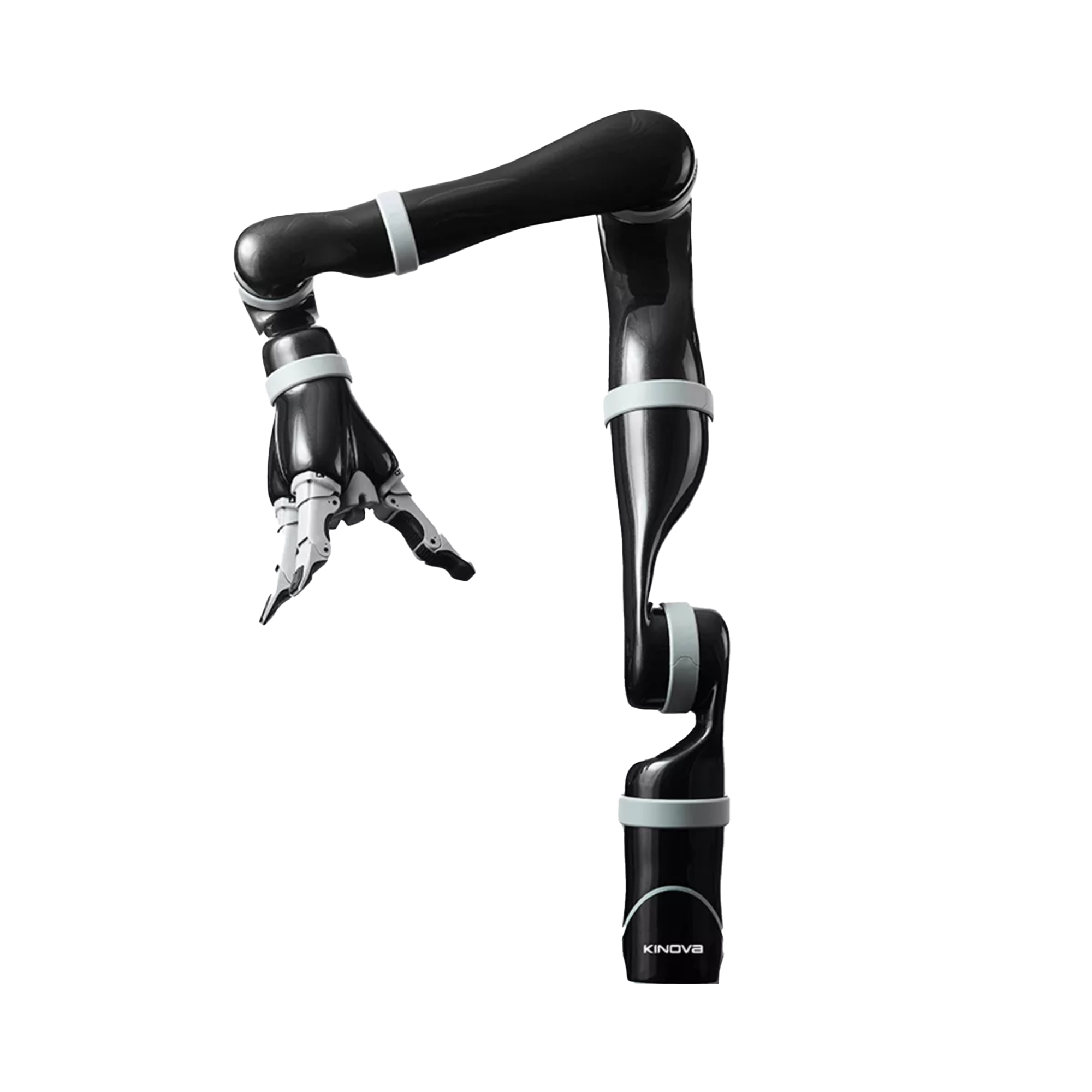
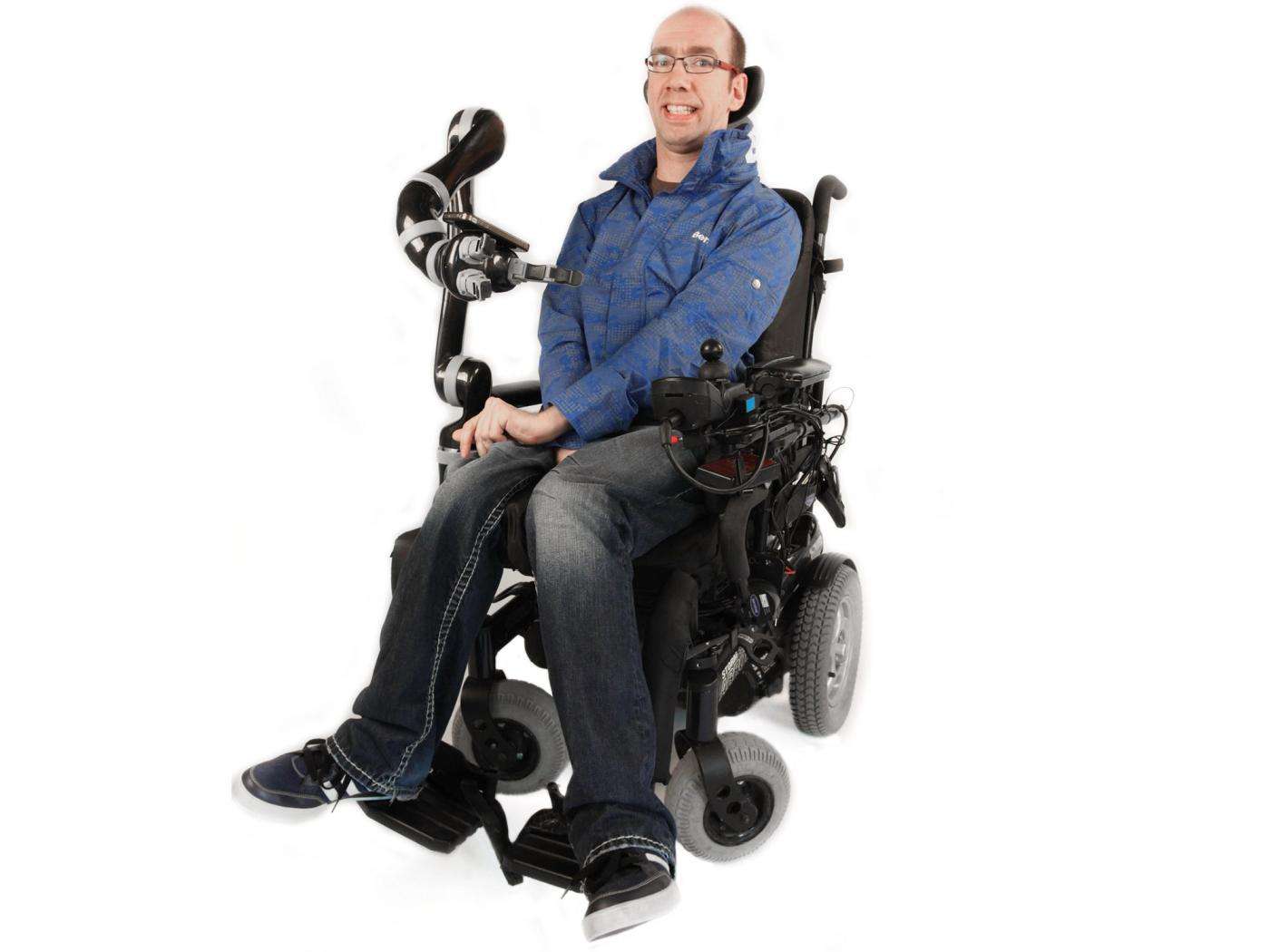
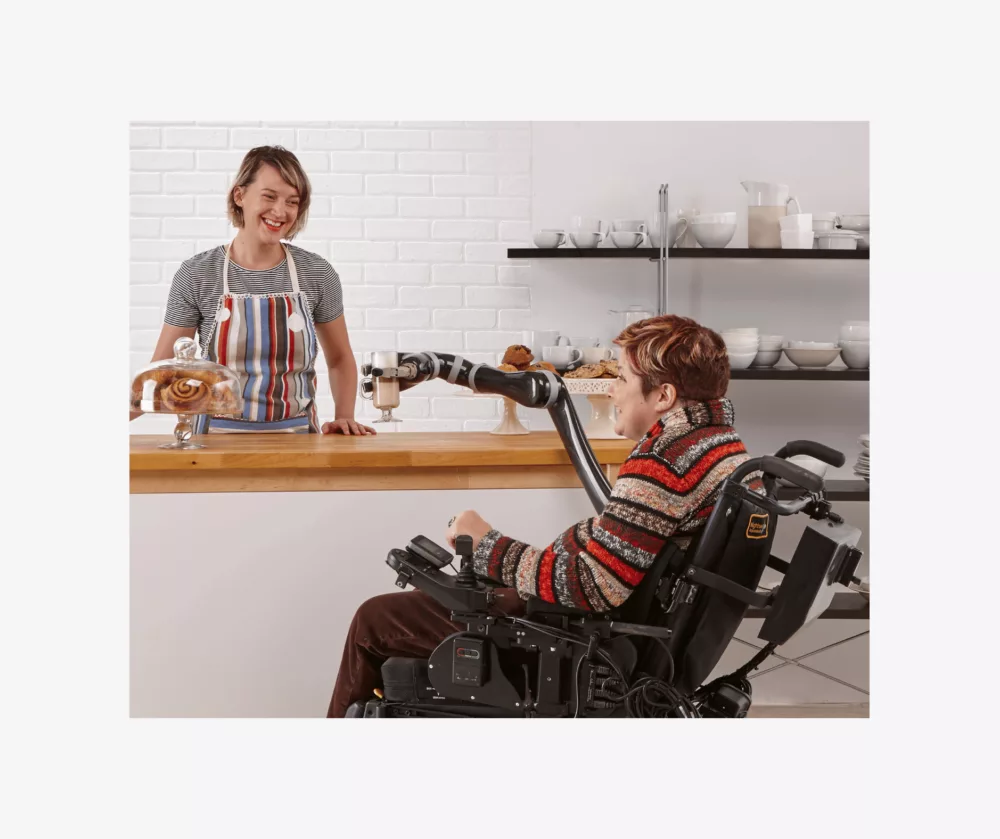

The Kinova JACO is a wheelchair-mounted assistive robotic arm designed to help people with upper-limb limitations perform everyday reaching, grasping, eating, drinking, and object-handling tasks.

Get quotes in 24–48 hours

Verified suppliers & secure process

Transparent pricing & guidance


The Kinova JACO is a lightweight assistive robotic arm designed to mount on compatible powered wheelchairs and support greater independence in daily activities.
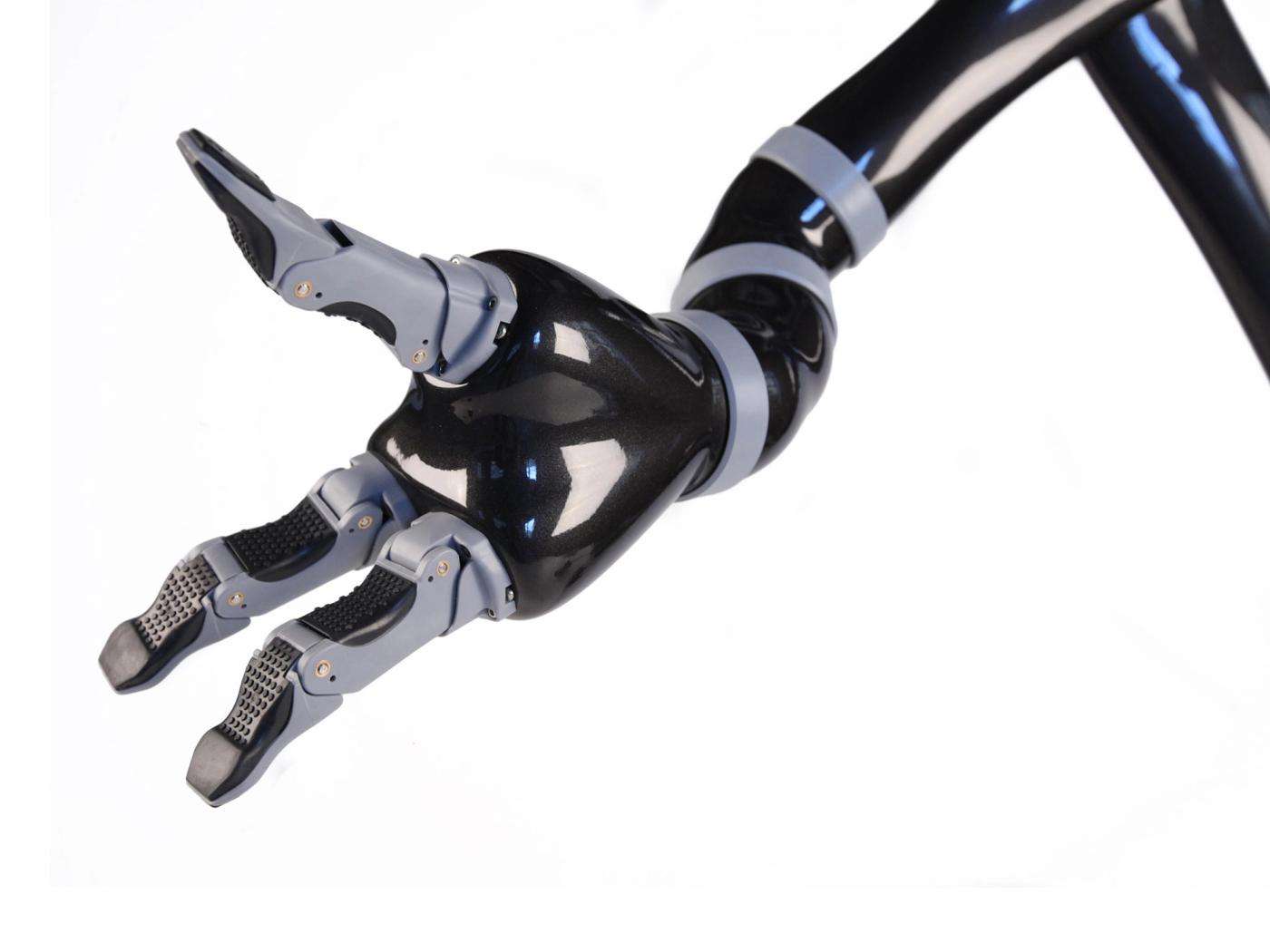
It combines approximately 900 mm of reach, multi-joint movement, a three-finger gripper, configurable user controls, and a compact 5.4 kg arm with the three-finger gripper that can reach objects around the user.
JACO is best suited for people with significant upper-limb limitations who need help with eating, drinking, opening doors, picking up objects, operating switches, and other controlled everyday tasks.
Its wheelchair-mounted design, human-scale reach, and configurable controls make JACO most valuable as an assistive device for users whose independence depends on reliable access to everyday objects and environments.
Extends around the user to access tables, shelves, doors, and nearby objects.
Handles everyday objects within reach-dependent payload limits of the exact configuration.
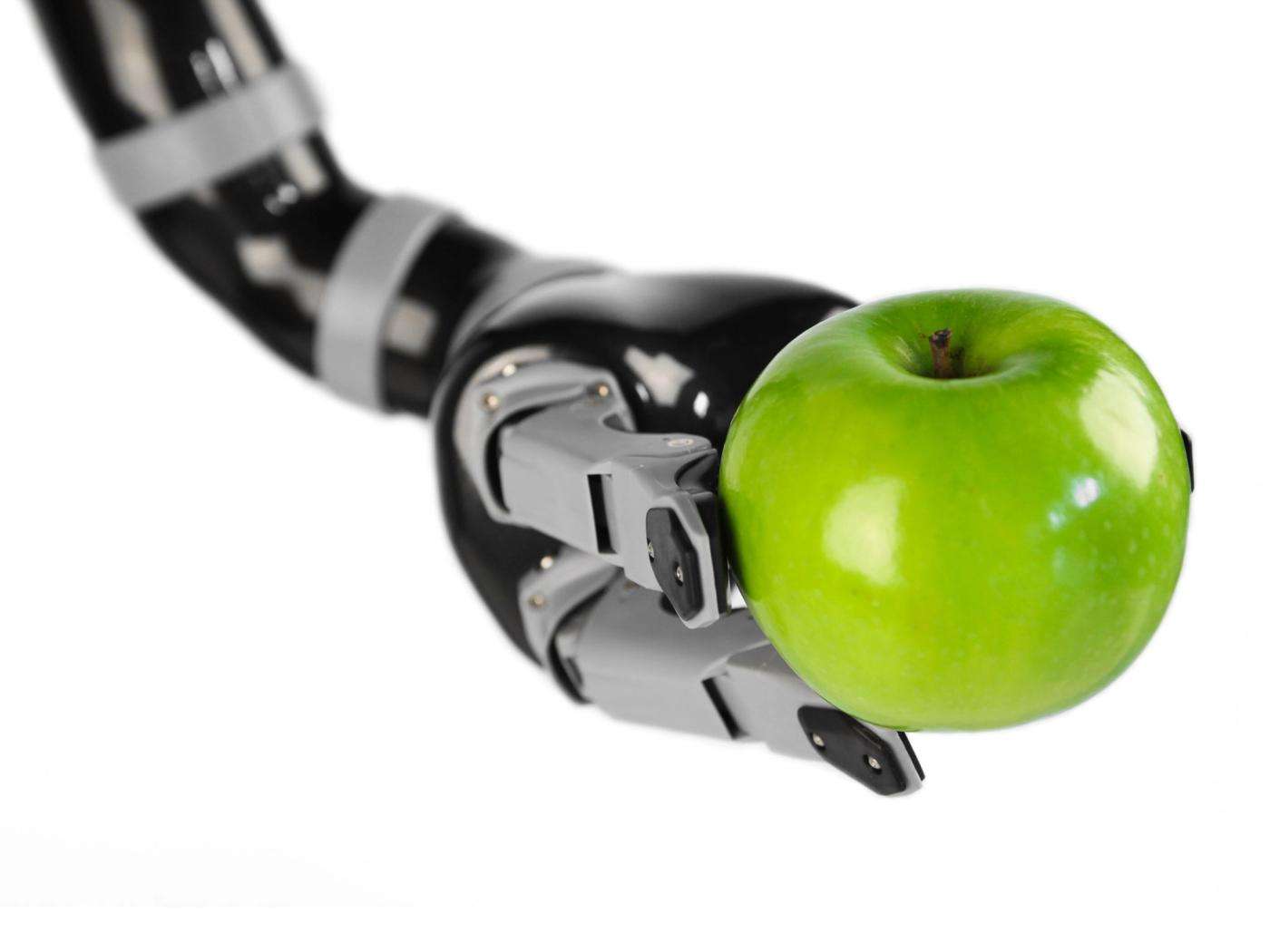
Supports grasping cups, food, utensils, containers, switches, and personal items.
Designed for integration with compatible powered wheelchairs and user seating systems.
Can be operated through supported joysticks, switches, or alternative access methods.
Approx. 5.4 kg with the three-finger gripper for wheelchair mounting.
Assistive robotic arm
Daily-living assistance
Indoor; IPX2, −10–40 °C
Provider-installed assistive arm
1.6 kg; 1.3 kg at 900 mm
900 mm
Wheelchair-mounted arm
Integrated 3-finger gripper
~0.2 m/s linear
Depends on wheelchair battery
24 VDC wheelchair power
Joystick and assistive controls
Position/current feedback
Not publicly specified
5.4 kg with gripper


The Kinova JACO price is normally provided through a specialist assessment and quotation rather than a single public retail price. The final cost can change according to the arm generation, wheelchair model, mounting hardware, user-control interface, clinical assessment, installation, training, delivery country, taxes, warranty, and support. Funding pathways, insurance, disability programmes, or equipment grants may also affect what the user ultimately pays.
This is why a JACO price found online may not represent a complete usable system. The arm must be matched to the wheelchair, seating position, user abilities, daily tasks, and local service arrangements. A lower equipment-only figure can become more expensive once mounting, controls, assessment, setup, and follow-up support are added. For an assistive device, the important question is not only the headline price but whether the complete configuration is safe, usable, maintainable, and supported in the user’s region.
You can request a Kinova JACO quote through Anton Robots to review the required package, regional supplier options, delivery, and support before purchasing.
You can request specialist sourcing and supplier guidance for the Kinova JACO through Anton Robots. We help buyers check availability, compare packages, understand what is included, and decide whether the robot is appropriate for the intended use. The Kinova JACO may also be available through Kinova, authorised or specialist suppliers, distributors, and selected robotics sellers, but not every offer includes the same equipment or support.
Before buying, confirm the exact model, configuration, controller, cables, end effector, mounting hardware, software access, freight, taxes, warranty, training, and after-sales service. This is especially important for individual users, families, occupational therapists, rehabilitation teams, disability organisations, wheelchair providers, and healthcare services because the robot normally needs to fit a specific workflow, environment, user, machine, or teaching programme. Choosing only the lowest displayed price can result in missing hardware, incompatible controls, unsupported software, or unexpected integration costs.
To start, request a Kinova JACO quote and Anton Robots can help you compare the complete package, delivery terms, and support before placing an order.
You can look for a Kinova JACO for sale through Kinova, specialist robotics suppliers, distributors, used-equipment sellers where applicable, and robot marketplaces such as Anton Robots. However, finding a listing is only the first step. The important part is confirming the exact product identity, generation, configuration, condition, controller, end effector, software, documentation, and support. A low advertised price may exclude equipment needed to operate the robot, such as power hardware, mounting, grippers, safety devices, licences, training, freight, taxes, or commissioning.
For professional, educational, or assistive buyers, the safest approach is to compare the total delivered and usable package rather than the robot arm alone. Check whether the seller can provide a serial number, packing list, specification sheet, warranty terms, expected delivery date, spare-parts route, and technical contact. For legacy or used equipment, also request service history, operating hours, fault records, and confirmation that the controller and software are included.
If you are searching for a Kinova JACO for sale, contact Anton Robots before ordering so the package and suitability can be reviewed.
Yes. You can get a quote for the Kinova JACO through Anton Robots. A useful quote should cover more than the base robot price. It should clearly identify the arm generation and configuration, wheelchair compatibility, mounting hardware, control interface, assessment, installation, training, delivery, warranty, and support.
This matters because the robot arm is only one part of a complete solution. The intended task, payload, reach, object, user, machine, workspace, software, safety measures, and support requirements can all change the correct configuration and total cost. A quote that appears cheaper may exclude essential tooling, mounting, controls, integration, delivery, training, or warranty handling.
Before requesting a quote, provide the destination country and a practical description of what the robot needs to do, including object weight, required reach, cycle expectations, environment, available space, and existing equipment. Anton Robots can then help compare the Kinova JACO with other robot options and obtain a package aligned with the real use case rather than only the headline specification.
A typical Kinova JACO package can vary by supplier, region, configuration, and whether the offer is for the robot alone or a complete application. Before purchasing, ask for a written packing list. The package may include:
Two offers can use the same product name while including very different hardware, software, services, and warranty coverage. An end effector, controller, mounting system, safety equipment, or specialist installation may be essential even when it is not shown in the headline listing. Confirm electrical requirements, software versions, licences, compatible accessories, documentation language, spare-parts availability, and responsibility for customs or commissioning. For individual users, families, occupational therapists, rehabilitation teams, disability organisations, wheelchair providers, and healthcare services, the complete usable system is more important than the lowest arm-only price.
You can request an itemised Kinova JACO package quote through Anton Robots before buying.
The main sizing specification for the Kinova JACO is approximately 900 mm of reach and reach-dependent payload of roughly 1.3 to 1.6 kg. These figures must be checked against the complete task rather than the object alone. Payload normally includes the gripper, tool, adapter, cables, sensors, and part. Reach must cover every required position with enough clearance for the robot, tool, object, fixtures, user, or machine.
Operating at the edge of the payload or workspace can reduce practical flexibility. Repeatability is also different from absolute accuracy and does not guarantee complete-system performance. Gripper compliance, calibration, vision, fixtures, object variation, and programming affect the final result. The published assistive-arm figures can vary by generation and operating position, so the exact manual and supplier configuration should be confirmed.
Before purchasing, provide a drawing or simple layout with object weight, tool weight, required positions, and available space. You can request sizing advice for the Kinova JACO through Anton Robots.
The Kinova JACO may be available for international delivery, but shipping depends on the seller, destination country, product status, package size, batteries or power equipment, export rules, customs requirements, local regulations, and regional support. The advertised product price may not include freight, insurance, customs clearance, import duty, VAT, GST, handling, local delivery, installation, or return shipping for repairs.
Buyers should ask whether the seller ships the complete package and whether the controller, cables, tools, mounting hardware, and accessories travel in the same shipment. It is also important to confirm who is responsible for import documentation and whether local technical support is available after delivery. For legacy, specialised, or configured robots, international shipping may be possible while commissioning or service remains limited in the destination country. Do not compare only the base price. Compare the full landed and supported cost.
You can request an international Kinova JACO quote through Anton Robots to check delivery assumptions, import costs, and regional support before purchasing.
Kinova JACO stock and delivery time can change according to specialist assessment, regional distribution, wheelchair compatibility, funding approval, configuration, and production scheduling. Some sellers may hold complete local stock, while others configure, import, assemble, refurbish, or source the robot only after an order is placed. A product page does not guarantee that the exact model, controller, accessory, software version, or support package is ready to ship. Delivery can also be affected by payment approval, export documentation, freight, customs clearance, production scheduling, integration work, and training availability.
If the robot is needed for a course, factory project, medical assessment, exhibition, research deadline, or replacement cell, confirm availability before committing. A reliable supplier should state whether the item is new, used, refurbished, backordered, configured to order, or subject to assessment. It should also identify what is included and provide a realistic delivery estimate.
You can request current Kinova JACO availability through Anton Robots before placing an order.
Before buying the Kinova JACO, confirm the warranty period, covered components, exclusions, technical-support route, repair location, response process, and spare-parts availability. Buyers may need help with assessment, mounting, control setup, training, software configuration, repairs, replacement parts, and coordination with the wheelchair provider. The cheapest listing is not always the safest option if the seller cannot diagnose faults, provide compatible parts, or coordinate a repair.
Ask who supports the robot after delivery, whether labour and shipping are covered, how accessories and controllers are treated, and what happens if the product arrives damaged or incomplete. For used or legacy units, request a condition report and understand whether the seller offers any warranty at all. For specialist assistive or industrial systems, confirm whether installation, validation, and training are separate services. Software versions and licence access should also be documented because unsupported software can limit a technically functional robot.
If the Kinova JACO will be important to a user, class, laboratory, or production process, support should be part of the buying decision. Contact Anton Robots to review the proposed package before purchasing.
The Kinova JACO can be worth buying when its capabilities match the real use case. It is designed around eating, drinking, retrieving objects, opening doors, pressing switches, handling personal items, and other daily-living tasks, and its key sizing point is approximately 900 mm of reach and reach-dependent payload of roughly 1.3 to 1.6 kg. The value comes from choosing the correct controller, end effector, accessories, software, installation, and support. It may be a poor purchase if payload, reach, precision, speed, duty cycle, environmental protection, safety requirements, or product status do not fit the project. Do not treat an educational arm as an industrial production robot, a legacy robot as a current turnkey platform, or an assistive arm as a general automation product.
Before buying, include the tool weight, object weight, required positions, operating hours, user or operator needs, integration points, and recovery process. Compare alternatives when requirements are close to the robot’s limits.
You can use Anton Robots to compare robot models and request advice before selecting the Kinova JACO.
Yes, the Kinova JACO can be suitable for daily living tasks when the task is within the arm’s reach, payload, gripper, and user-control capabilities. A successful setup depends on more than the robot arm.
Buyers should check the object size, grip surface, table height, wheelchair position, doorway clearance, user control method, and whether caregiver assistance is needed. The complete cycle should be reviewed with the actual object, tool, fixtures, software, operating environment, and expected throughput. JACO can increase independence, but it does not guarantee that every object or environment will be accessible without assessment, practice, or changes to the setup.
If the task requires performance near the robot’s payload, reach, precision, speed, or duty-cycle limits, a larger or more industrial platform may provide more margin. A proof-of-concept is useful before committing to multiple units or a full deployment. You can request a Kinova JACO daily living tasks quote through Anton Robots to compare the robot, end effector, accessories, integration, and support required for the application.
The Kinova JACO does not automatically fit every powered wheelchair. Compatibility depends on the wheelchair frame, seating system, available mounting points, user position, chair electronics, centre of gravity, transport requirements, and the mounting solution approved for the specific combination. The arm must be positioned so the user can reach useful areas without blocking transfers, controls, doors, tables, or normal wheelchair movement. The added weight and arm envelope also need to be considered.
Buyers should involve the wheelchair provider, occupational therapist, assistive-technology specialist, and JACO supplier before ordering. A complete assessment should confirm the mount, power connection, controller interface, safe stow position, driving clearance, and whether the chair remains stable and serviceable. Do not purchase the arm based only on reach or payload.
You can request JACO compatibility guidance through Anton Robots and provide the exact wheelchair make, model, seating configuration, and user requirements for review.
The Kinova JACO can be programmed or configured using supported wheelchair joysticks, switches, proportional controls, or other configured assistive interfaces. The practical level of access depends on the exact model, controller, software version, licences, and package supplied.
Before buying, define whether the project needs simple taught positions, visual workflows, offline programming, external I/O, machine communication, ROS, Python, custom APIs, vision, or low-level control. A product described as easy to program may still require integration work when it must communicate with a PLC, CNC machine, conveyor, camera, safety system, or user interface. The goal is reliable user access rather than general-purpose industrial programming, and the control method must be matched to the individual’s movement, strength, cognition, and daily routine. Ask the supplier to demonstrate the required workflow and confirm that documentation, software downloads, development libraries, example code, and technical support are available for the exact configuration. For older platforms, check operating-system and software compatibility before ordering.
If programming is central to the project, contact Anton Robots with the intended software stack so the correct package can be compared.
The Kinova JACO assistive arm is not the same product as a general industrial or research manipulator. It is designed around wheelchair-mounted daily-living assistance, user control, low-force object handling, and human-centred operation. Researchers may study assistive robotics with appropriate permissions and support, but buyers should not select JACO as a substitute for an industrial cobot, production arm, or unrestricted laboratory platform.
Factory automation normally requires different payload, repeatability, speed, interfaces, safety architecture, duty cycle, tooling, and integration support. Kinova also offers other robotic-arm platforms for research and medical development, so the exact product family matters. If the goal is manufacturing, machine tending, manipulation research, or custom AI development, define the technical requirements and compare purpose-built alternatives.
Anton Robots can help distinguish the JACO assistive system from other robot arms before a quote is requested.
A successful Kinova JACO deployment requires the complete package to be planned before the robot arrives. Confirm the user assessment, wheelchair make and model, seating position, mounting design, selected control interface, daily tasks, reach zones, charging or power connection, transport method, training, warranty, and local service route.
The buyer should also identify who will install, program, validate, maintain, and support the system. JACO should not be treated as a plug-and-play consumer gadget; poor mounting or control selection can make the system difficult or unsafe to use. Request drawings, manuals, electrical requirements, software versions, accessory compatibility, warranty terms, and a written packing list. For used or legacy equipment, add a condition inspection, program backup, controller check, and spare-parts review.
For education, confirm curriculum, account management, and classroom supervision. For assistive use, include user assessment, wheelchair compatibility, mounting, training, and follow-up support. A robot that is technically capable can still fail if tooling, controls, software, environment, or ownership responsibilities are unclear. Use the Anton Robots quote form to obtain an itemised package and deployment requirements before purchasing.
The Kinova JACO should not be assumed to be waterproof or suitable for unrestricted outdoor exposure. Published manuals for JACO generations describe limited ingress protection, and the complete system includes joints, electronics, connectors, gripper components, wheelchair mounting, and user controls that can be affected by rain, splashes, condensation, dust, impact, or extreme temperature.
Outdoor use may be possible in suitable dry conditions when the supplier and wheelchair provider approve it, but the arm should not be exposed to washdown, immersion, heavy rain, or environments outside the specified operating limits. The user also needs enough clearance to drive safely with the arm in its stored or operating position.
Ask the supplier to confirm the environmental rating, storage method, cleaning instructions, transport procedure, and what water exposure would do to the warranty. Anton Robots can help request the correct environmental guidance for the exact JACO generation and configuration.
Tell us what you need. Our experts will help you find the right robot for your business.
Browse Robots
Humanoid Robots
Robot Dogs
Robotic Arms
Cobots
AMR Robots
AGV Robots
Service Robots
Companion Robots

