Find, compare and buy robots from top manufacturers
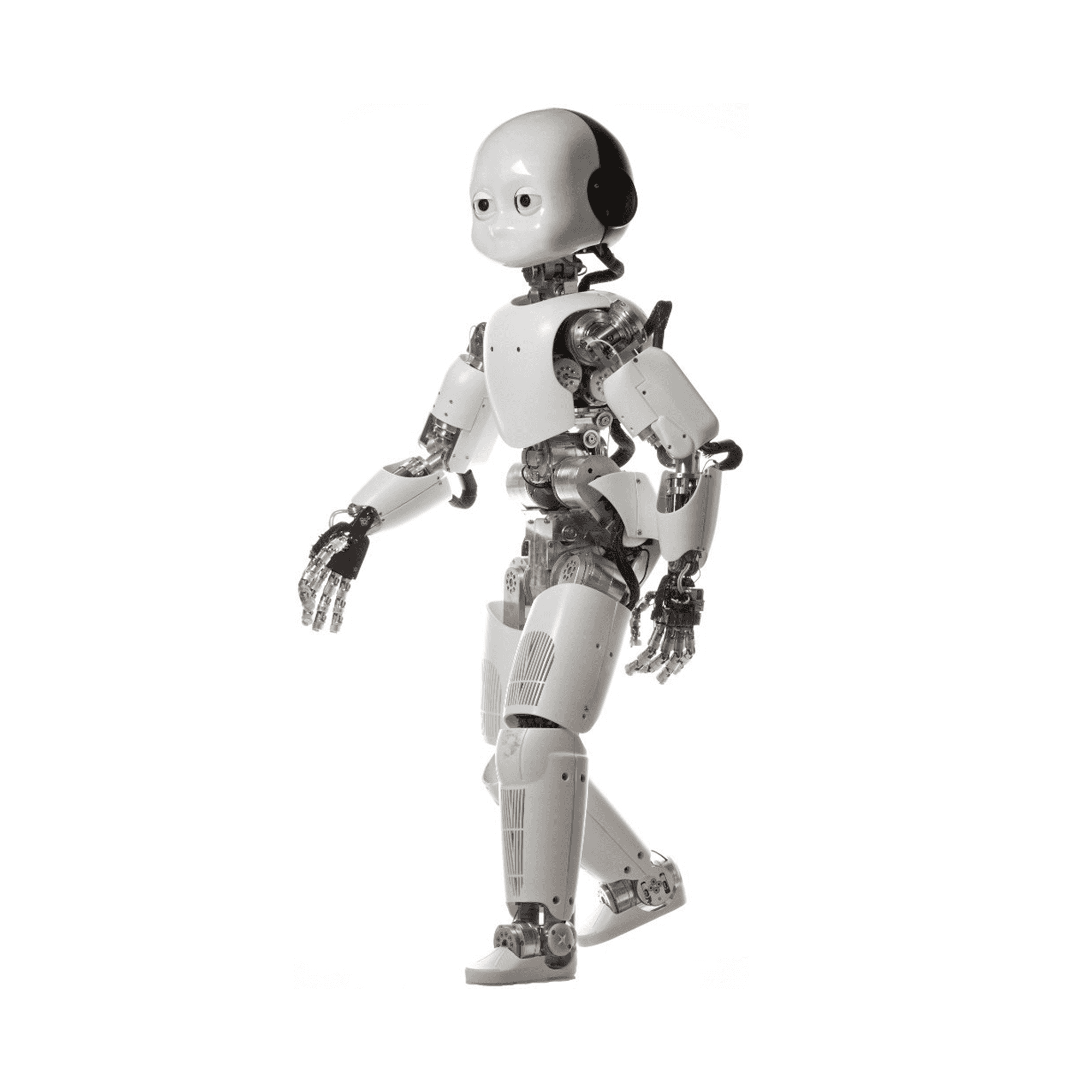
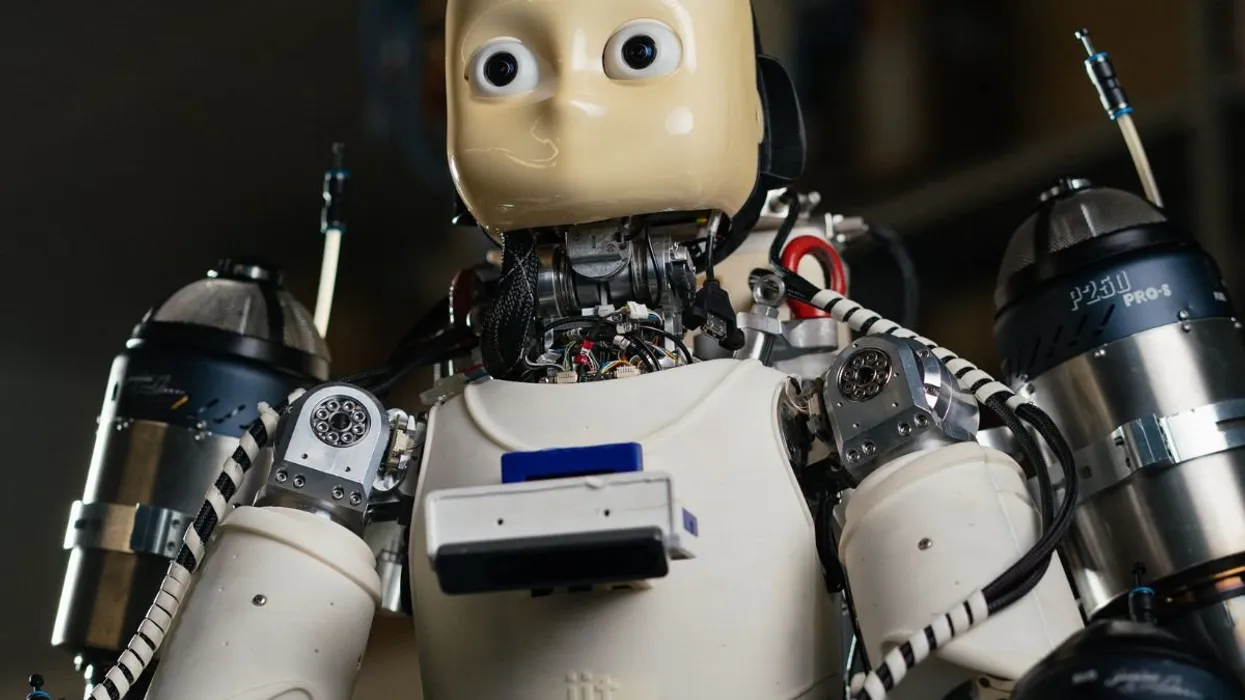
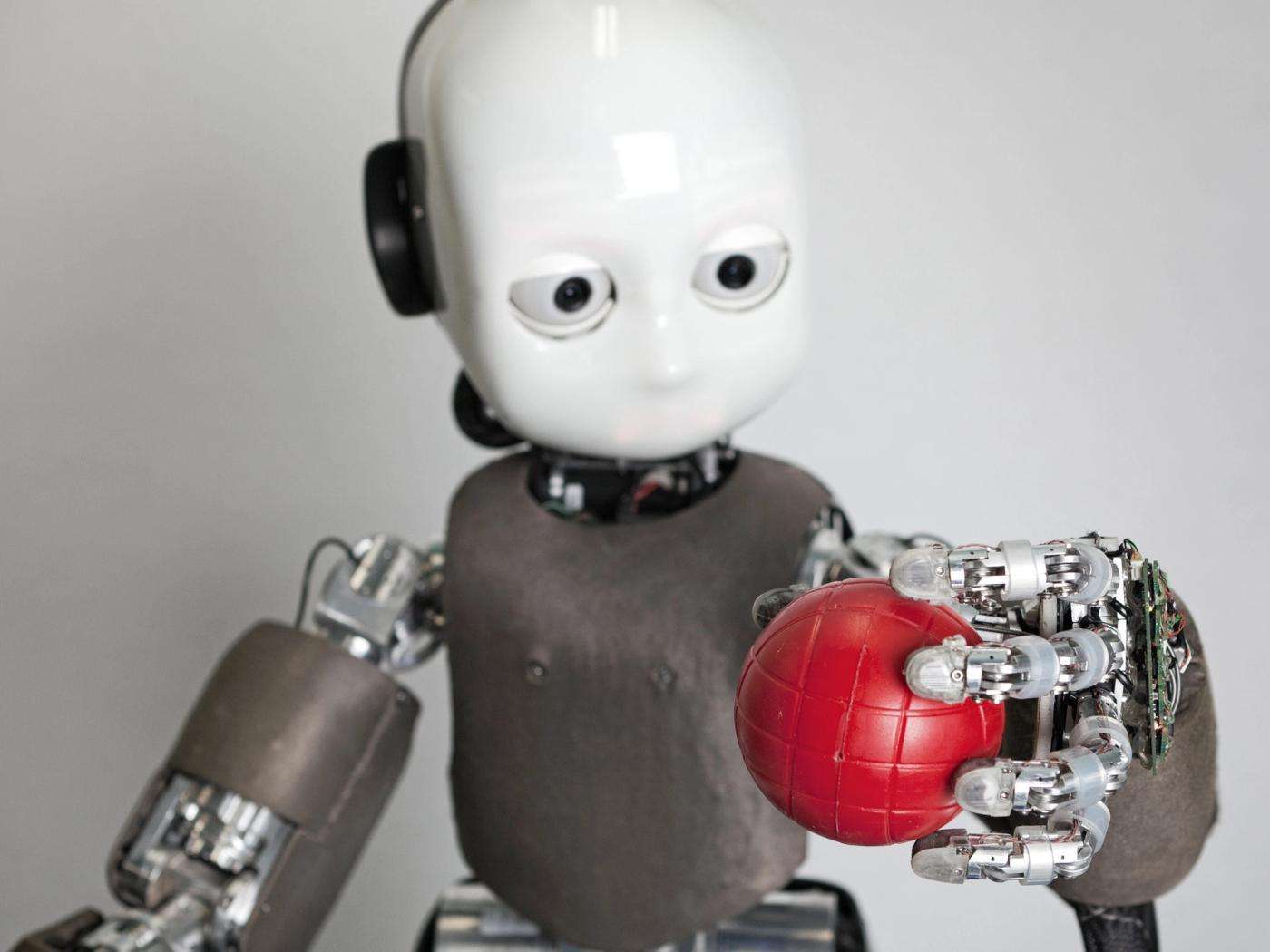
The iCub is an open research humanoid built for embodied cognition, developmental robotics, manipulation, tactile sensing, computer vision, motor learning, and human-robot interaction.

Get quotes in 24–48 hours

Verified suppliers & secure process

Transparent pricing & guidance


The iCub is an open research humanoid developed by the Italian Institute of Technology for embodied cognition, developmental robotics, manipulation, tactile sensing, vision, motor learning, and human-robot interaction.
The full platform uses 53 actuated axes, including highly articulated nine-degree-of-freedom hands, compliant legs, force-torque sensing, cameras, microphones, inertial sensing, and approximately 2,000 tactile sensing points.
iCub is supplied with YARP middleware, software, documentation, power equipment, a support computer, and access to a long-running international research community.
iCub is strongest as a specialised academic research platform, offering unusually rich sensing, articulation, and open software for long-term work in embodied cognition, manipulation, learning, and human-robot interaction.
Highly articulated full body supports research into movement, balance, and interaction.
Nine degrees of freedom per hand support grasping and manipulation studies.
Approximately 2,000 sensing points provide distributed contact information.
Force-torque sensors and compliant mechanics support physical interaction research.
Software, documentation, tools, and community support advanced robotics development.
Full-body, upper-body, head, hands, skin, and upgrade options support different labs.
Research humanoid robot
Embodied AI research
Indoor laboratories
Institutional research platform
Not publicly specified
Not publicly specified
Crawling, walking and sitting
Five-finger hands with 9 motors each and tactile sensing
Not publicly specified
Not publicly specified
External power or battery backpack
YARP-based control
Stereo cameras, microphones, IMU, encoders, force-torque and tactile sensors
Approx. 1,050 × 365 mm (height × width)
30 kg; 33 kg with battery backpack


The iCub price has an official indicative full-platform figure of approximately €250,000, while the upper-body version is around €200,000 and the head around €40,000 before project costs. IIT states that the exact quotation depends on configuration, sensors, upgrades, support, shipping and handling. A public number, when one exists, is not always the final delivered and usable cost. Buyers may also need to account for shipping, taxes, customs, software, batteries, controllers, installation, training, warranty, spare parts, local support and application integration.
Before comparing offers, confirm the exact model or condition, commercial status, included hardware, software rights, delivery terms and after-sales process. The better buying question is: what is included, what is excluded, and who supports the robot after delivery?
You can request iCub pricing, availability or an alternative comparison through Anton Robots before committing.
You can buy or request the iCub through Anton Robots in coordination with the Italian Institute of Technology. Anton Robots helps buyers verify the real commercial route, compare legitimate packages, understand what is included and decide whether the iCub is appropriate for the intended use case. iCub is an obtainable research platform supplied by IIT for a fee, with formal quotations and configurable versions rather than retail checkout.
Before buying, commissioning or importing a unit, confirm the exact version, regional availability, included hardware, software access, shipping, taxes, warranty, spare parts and technical support. A product page, research announcement or marketplace listing does not always mean that a robot is available for immediate commercial purchase. Professional buyers should compare the complete operational package and support route rather than only the lowest displayed price.
To start, request iCub buying or sourcing guidance through Anton Robots.
You can source a new iCub through IIT’s official quotation process and compare the project through Anton Robots. Finding a iCub for sale is only the first step. Buyers should verify whether the offer is current, new, used, refurbished, demonstration-only, research-restricted, subject to qualification or unsupported outside its original programme. Used academic units should be checked for version, upgrades, skin condition, motors, hands, computers, software image, service history and transfer support.
A useful comparison should cover the exact generation, included equipment, software licences, delivery country, expected lead time, warranty, replacement parts and who provides support after delivery. Avoid treating a third-party listing as proof of manufacturer support or legal access to proprietary software.
If you are looking for a iCub and want help checking the offer, contact Anton Robots. We can also compare it with other robots in the same category.
Yes. You can request an iCub quotation review through Anton Robots. A useful quote or commercial review should identify the exact version, ownership or programme structure, included equipment, software, accessories, shipping assumptions, taxes or import notes, warranty, delivery estimate, training and available support. The proposal should identify full body, upper body or head, version, hands, skin, sensors, computers, YARP software, training, delivery and support.
Buyers should provide the destination country, intended application, operating environment, required delivery date and any integration needs. That information helps determine whether the robot is commercially obtainable and whether the proposed package is technically suitable. The proposal should also state who commissions the system and what happens if the robot cannot meet the intended workflow.
Anton Robots can help compare the iCub against other relevant robots.
A typical iCub package or deployment may include the selected humanoid configuration, motors, hands, force sensors, tactile skin, cameras, power supply, support laptop, YARP software and documentation. The exact contents vary by seller, programme, configuration, product condition and country, so buyers should request a written packing and service list:
The official catalogue separates configurations and components, so the exact version must be specified. Hardware, software and support are often separated in robotics purchases. A low advertised price may exclude the charger, controller, compute, software, spare battery, installation, training or warranty handling required for practical use.
For business, education and research buyers, the complete operational package is more important than the headline price. You can request an itemised iCub offer or availability review through Anton Robots before committing.
IIT lists an indicative price of approximately €250,000 for a full iCub. The official catalogue also lists an upper-body configuration around €200,000 and a head around €40,000, with the final quote depending on version and options. The practical result depends on the exact configuration, software, environment, accessories and operator workflow rather than the headline specification alone. Indicative figures may exclude local taxes, import, lab preparation, training, upgrades and long-term maintenance.
Before buying or deploying the robot, verify the exact version, hands, skin, sensors, computers, support, shipping, warranty, installation and annual research budget. A proper evaluation should use the real tasks, objects, routes, users or research conditions instead of relying only on a stage demonstration. Request a formal IIT quotation for the complete project.
You can request iCub application advice through Anton Robots and compare the complete package or a commercially available alternative.
The full iCub uses 53 motors or actuated axes. Its body includes articulated eyes, head, torso, arms, hands and legs, with nine degrees of freedom in each hand. The practical result depends on the exact configuration, software, environment, accessories and operator workflow rather than the headline specification alone. Actuator count does not show usable payload, range, speed, maintenance or whether every joint is required for a particular study.
Before buying or deploying the robot, verify the selected iCub version, joint ranges, hand configuration, upgrades, calibration and spare actuators. A proper evaluation should use the real tasks, objects, routes, users or research conditions instead of relying only on a stage demonstration. Its articulation is intended for rich sensorimotor research rather than industrial throughput.
You can request iCub application advice through Anton Robots and compare the complete package or a commercially available alternative.
The iCub combines cameras, microphones, inertial sensing, force-torque sensors and distributed tactile skin. The full platform includes approximately 2,000 skin sensing points, supporting contact-rich interaction and manipulation research. The practical result depends on the exact configuration, software, environment, accessories and operator workflow rather than the headline specification alone. Sensor performance depends on calibration, wear, software, object contact, lighting, acoustics and the selected version.
Before buying or deploying the robot, verify sensor map, sample rate, calibration tools, replacement skin, force ranges, accessible data, synchronisation and support. A proper evaluation should use the real tasks, objects, routes, users or research conditions instead of relying only on a stage demonstration. Its sensory richness is one of the platform’s strongest research advantages.
You can request iCub application advice through Anton Robots and compare the complete package or a commercially available alternative.
The iCub uses YARP middleware and an open software ecosystem. Researchers can access robot interfaces, simulation, perception, control and community-developed modules for cognition and human-robot interaction. The practical result depends on the exact configuration, software, environment, accessories and operator workflow rather than the headline specification alone. The platform requires advanced C++, Linux, control and robotics expertise, and research code may depend on specific versions and hardware.
Before buying or deploying the robot, verify YARP release, operating system, simulator, repositories, experiment code, compute, backups, cybersecurity and staff skills. A proper evaluation should use the real tasks, objects, routes, users or research conditions instead of relying only on a stage demonstration. It is an open laboratory platform, not a no-code commercial robot.
You can request iCub application advice through Anton Robots and compare the complete package or a commercially available alternative.
The full iCub includes compliant legs for locomotion research and dexterous hands for manipulation. It can support studies in balance, reaching, grasping, tactile exploration, tool use and coordinated whole-body behaviour. The practical result depends on the exact configuration, software, environment, accessories and operator workflow rather than the headline specification alone. Walking and manipulation remain research tasks with modest payload, speed and reliability compared with specialised industrial robots.
Before buying or deploying the robot, verify the selected version, floor, support structure, object set, hand skin, grasp success, falls, supervision and recovery. A proper evaluation should use the real tasks, objects, routes, users or research conditions instead of relying only on a stage demonstration. Its value is learning and experimentation rather than productive material handling.
You can request iCub application advice through Anton Robots and compare the complete package or a commercially available alternative.
Choose the full body for locomotion and whole-body studies, the upper body for manipulation and interaction, and the head for perception and social-attention research. IIT offers modular configurations with materially different prices, space, maintenance and research capability. The practical result depends on the exact configuration, software, environment, accessories and operator workflow rather than the headline specification alone. Buying a full body adds cost and complexity when the project never uses the legs, while a smaller configuration cannot later reproduce every whole-body experiment without upgrades.
Before buying or deploying the robot, verify research questions, grants, lab space, safety, staff, desired publications, upgrade path and five-year support budget. A proper evaluation should use the real tasks, objects, routes, users or research conditions instead of relying only on a stage demonstration. Select the smallest configuration that answers the planned research programme.
You can request iCub application advice through Anton Robots and compare the complete package or a commercially available alternative.
Choose iCub for advanced tactile and embodied-cognition research, ROBOTIS OP3 for open locomotion and RoboCup, and NAO V6 for compact social interaction and education. The platforms differ dramatically in price, size, openness, hands, sensors, maintenance and target users. The practical result depends on the exact configuration, software, environment, accessories and operator workflow rather than the headline specification alone. A more expensive humanoid is not automatically better when the course or experiment needs only walking, coding or dialogue.
Before buying or deploying the robot, verify research goal, budget, payload, walking, tactile sensing, software, class size, technician capability and support duration. A proper evaluation should use the real tasks, objects, routes, users or research conditions instead of relying only on a stage demonstration. Match the platform to the scientific question and available team.
You can request iCub application advice through Anton Robots and compare the complete package or a commercially available alternative.
Yes, the iCub can be supplied internationally to qualified research organisations through IIT’s project process. Delivery or deployment depends on the destination country, commercial status, export controls, freight method, battery rules, customs, regional certifications and local service coverage. The lab must confirm freight, installation, power, safety, technician access, import costs and ongoing support.
Before ordering, ask who acts as importer of record, whether software and warranty remain valid in the destination country and whether installation requires an approved local partner. Buyers should also confirm package dimensions, battery documentation, insurance, damage procedures, data-hosting requirements and any end-use restrictions. A robot that can physically be transported is not necessarily supported, activatable or legally deployable in every market.
You can request international availability for the iCub through Anton Robots so the complete route can be checked.
iCub availability and delivery time can change according to production, regional inventory, programme eligibility, configuration and current demand. iCub is produced and configured through formal research orders rather than normal warehouse inventory, so lead time is project-specific. A robot appearing in a video, research paper or online listing should not automatically be treated as stocked and ready to ship.
Before committing to a project date, ask whether the order is confirmed or only an expression of interest, what equipment and software are available and when the complete package can be delivered and commissioned. Lead time can also be affected by export review, freight, customs, battery transport, software activation, site preparation and training.
You can request current iCub availability through Anton Robots. Professional buyers should request written confirmation of these points before approving a budget, import, research programme, or deployment.
Before buying or deploying the iCub, check the warranty or support term, covered components, exclusions, service territory, repair process, software entitlement, spare-parts availability and who provides technical help. Confirm warranty length, remote support, onsite intervention, software updates, replacement motors, skin, hands, sensors and the upgrade path for the selected version. Ask these questions:
For a prototype, research platform or legacy robot, lifecycle support should be a primary buying criterion. Contact Anton Robots to review the package before purchase or deployment.
The iCub is worth considering if you need a world-class open humanoid for embodied cognition, tactile manipulation, developmental robotics or human-robot interaction. Its strongest value comes from its 53 actuated axes, dexterous hands, extensive tactile skin, force sensing, YARP software and established international research community.
However, it is only a good choice when the use case matches the robot’s maturity, commercial status, regional availability and operating limits. It is expensive, technically demanding and designed for advanced laboratories rather than routine teaching, public service or industrial production. Buyers should compare complete ownership cost, software access, support, expected lifetime and alternatives that may perform the same task with less risk. For a business or research project, define a measurable outcome before committing rather than purchasing only for novelty or visual impact.
Compare other robots in the same category and request application advice through Anton Robots.
Tell us what you need. Our experts will help you find the right robot for your business.
Browse Robots
Humanoid Robots
Robot Dogs
Robotic Arms
Cobots
AMR Robots
AGV Robots
Service Robots
Companion Robots

