Find, compare and buy robots from top manufacturers
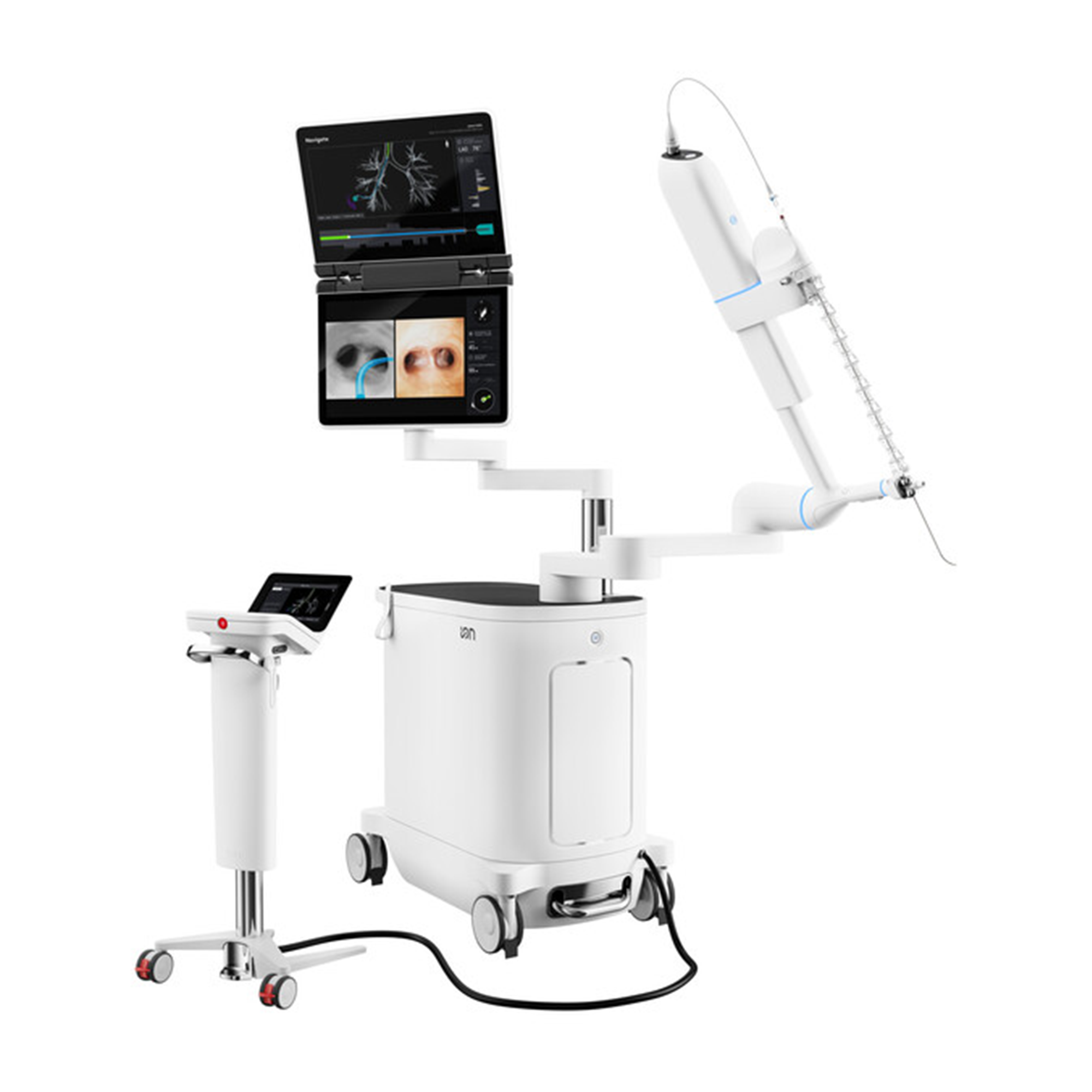
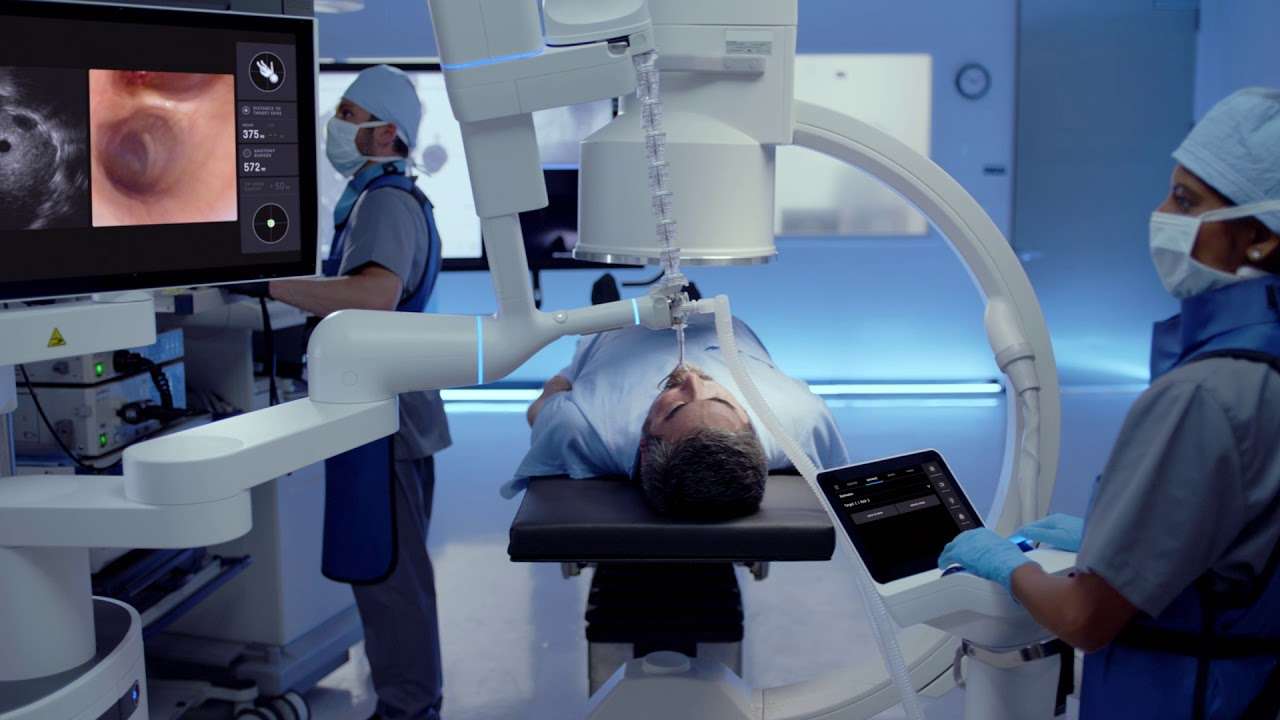

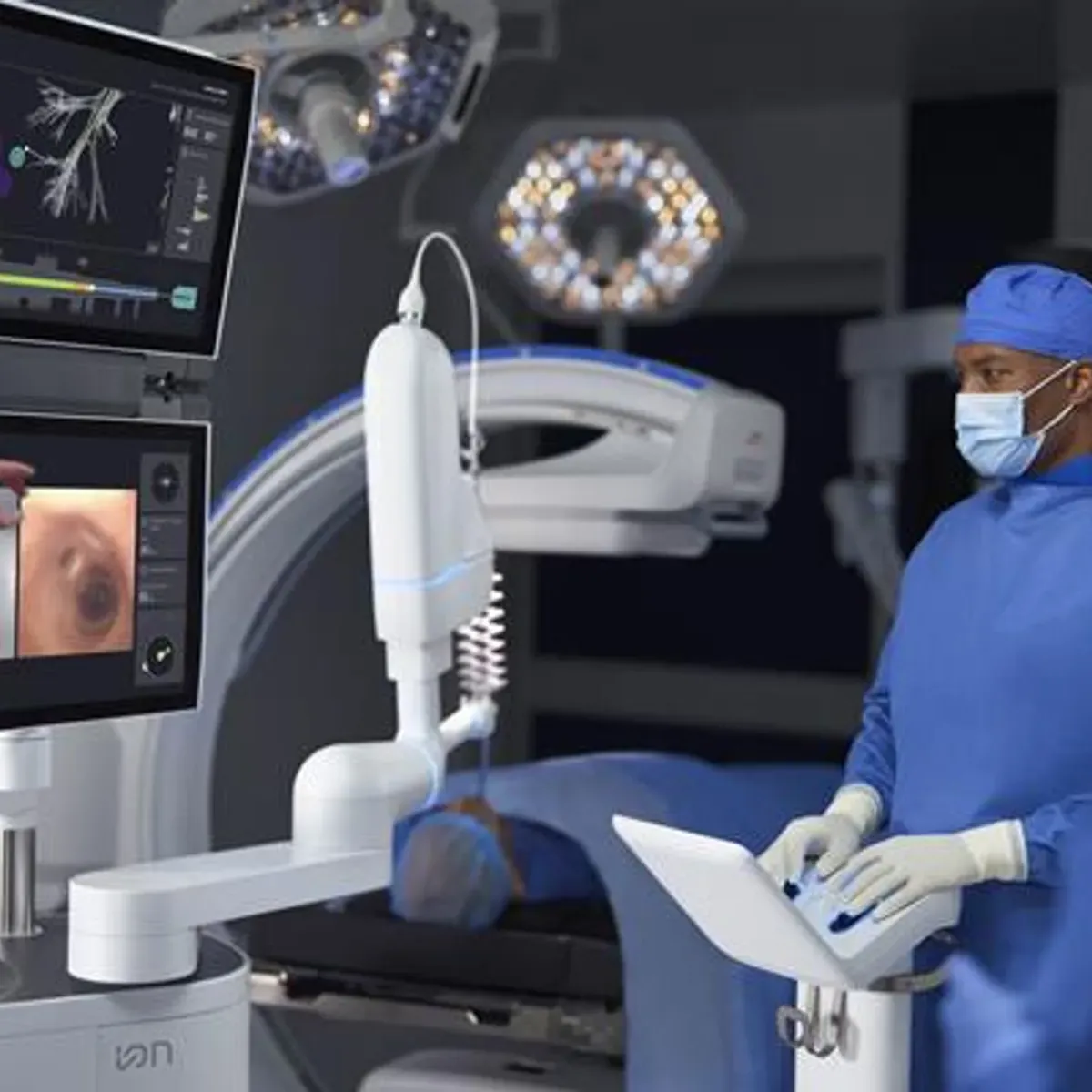
The Intuitive Ion is a robotic-assisted bronchoscopy platform designed to help physicians navigate deep into the lung and obtain tissue from suspicious pulmonary nodules.

Get quotes in 24–48 hours

Verified suppliers & secure process

Transparent pricing & guidance


The Intuitive Ion is a robotic-assisted bronchoscopy platform developed for minimally invasive navigation and biopsy of pulmonary nodules.
It combines a thin fully articulating catheter, fibre-optic shape sensing, CT-based three-dimensional pathway planning, integrated visualisation, and compatible biopsy tools to help a trained physician reach targets throughout the lung.
Ion is best suited for hospitals and pulmonary programmes evaluating advanced diagnostic bronchoscopy, subject to local approval, clinical training, imaging workflows, pathology strategy, capital planning, and manufacturer service coverage.
Its specialised navigation and shape-sensing architecture make Ion strongest within established pulmonary diagnostic programmes that can integrate imaging, bronchoscopy, pathology, training, and service support.
Measures the catheter's full shape hundreds of times per second during navigation.
Thin catheter design supports access through branching airways.
The catheter can articulate in any direction to follow planned pathways.
PlanPoint software creates a three-dimensional route from pre-procedure CT imaging.
A removable vision probe supports direct airway visualisation during navigation.
A 2.0 mm working channel accepts compatible needles and biopsy instruments.
Robotic-assisted bronchoscopy system
Peripheral lung nodule biopsy
Bronchoscopy suites and ORs
Bronchoscopy suite / OR deployment
No transport payload
All 18 lung segments
Wheeled clinical workstation; the catheter navigates through the pulmonary airways
Fully articulating catheter, removable vision probe and compatible biopsy tools
Not publicly specified
Not publicly specified
Not publicly specified
CT planning, shape sensing and physician control
Fiber-optic shape sensing + 120° vision
Not publicly specified
Not publicly specified


The Intuitive Ion price is not listed as a standard public retail figure and is normally supplied through a hospital capital-equipment and programme proposal. The commercial structure can include the capital platform, software, procedure-specific catheters and biopsy tools, installation, training, service and volume assumptions. The final cost can change with country, configuration, accessories, installation, training, service coverage, shipping, taxes and any application-specific equipment.
Buyers should therefore compare the complete delivered and deployable package rather than a headline number. For hospitals, interventional pulmonology teams, thoracic programmes and authorised clinical procurement departments, the important questions are what is included, what must be purchased separately, who is responsible for commissioning and who provides support after installation.
Hospitals should calculate recurring procedure costs, pathology and imaging workflow, room utilisation and service coverage alongside the capital acquisition. Ask the seller to separate capital hardware, recurring software, consumables, optional tools, freight, site work, training and annual service so proposals can be compared on the same basis. Also confirm the quotation currency, validity period, payment milestones, estimated lead time and whether taxes or import charges are excluded.
You can request a Intuitive Ion quote through Anton Robots to compare the Ion system, PlanPoint planning software, catheter and vision components, compatible biopsy tools, imaging integration, installation, training, service, consumables and programme implementation before making a purchasing decision.
You can buy, source or request the Intuitive Ion through Anton Robots, depending on the product’s current commercial status and your region. Anton Robots helps buyers compare suppliers, confirm availability, understand the proposed package and decide whether the Intuitive Ion fits the intended use case. Ion is acquired through Intuitive’s authorised clinical sales and service organisation rather than a normal online retailer. Not every offer is equivalent: one proposal may cover only the core system, while another may include application hardware, software, installation, training, warranty handling, spare parts and ongoing service.
Before committing, confirm the exact model or generation, included components, delivery destination, regulatory or site requirements, commissioning responsibilities and support route. This is especially important for hospitals, interventional pulmonology teams, thoracic programmes and authorised clinical procurement departments. Ask whether the seller is authorised for the destination market, whether the warranty remains valid there and who will perform installation or repairs. Obtain an itemised written proposal rather than relying on a marketplace title, product photograph or verbal promise.
To begin, request a Intuitive Ion quote and Anton Robots can help compare the complete purchase or deployment package.
You can look for the Intuitive Ion for sale through the manufacturer, authorised regional partners, specialist suppliers and robot marketplaces such as Anton Robots. Ion is a current commercial robotic-assisted bronchoscopy platform, but availability and approved use depend on country and regulatory status. Finding a listing is only the first step. The safer comparison is the total delivered and operational cost, including the exact generation, hardware configuration, software access, required accessories, freight, installation, training, warranty, service and any local compliance work.
A low advertised figure may exclude equipment that is essential for the intended workflow. For hospitals, interventional pulmonology teams, thoracic programmes and authorised clinical procurement departments, supplier capability and post-sale support can matter as much as the system itself. Where used, refurbished or old-stock equipment is involved, request the serial number, manufacturing date, maintenance history, software status, ownership documentation and written confirmation that parts and service remain available. Do not assume that a historic product page means the same configuration is still manufactured or supported.
If you are looking for a Intuitive Ion for sale, contact Anton Robots before ordering so the current commercial status and package can be checked.
Yes. You can get a quote for the Intuitive Ion through Anton Robots. A useful quote should show more than the base equipment price. It should identify the exact system version, included hardware, software or licences, accessories, installation assumptions, training, freight, warranty, expected lead time and service coverage. For this product, the quote should specifically address the Ion system, PlanPoint planning software, catheter and vision components, compatible biopsy tools, imaging integration, installation, training, service, consumables and programme implementation.
This matters because two proposals carrying the same product name can represent very different deployable solutions. Before requesting pricing, define the application, country, site, expected usage, integration needs and required support level. Include any deadline, facility constraints, user numbers, required documentation and acceptance criteria. Ask the supplier to list exclusions and optional items separately and to state what must be supplied by the buyer or a third-party integrator.
Anton Robots can help compare the Intuitive Ion with other surgical robots and prepare a request based on the real project rather than an incomplete base configuration.
A typical Intuitive Ion package may include the core system and the standard components listed for the selected configuration, but the exact scope varies by seller, region and project. Before buying, request an itemised packing and services list. Confirm whether the proposal includes:
Clarify which components are reusable capital equipment and which catheters, needles, accessories or other items are consumed or replaced between procedures.
This matters because the robot or platform may be only one part of the working solution. Software, tools, consumables, site preparation, integration, validation and support may be separate. Ask which components are required for basic operation, which are application-specific, which are consumable, and which carry their own warranty or licence. The proposal should also identify quantities, model numbers, software terms, documentation, installation responsibility and anything shown in demonstrations but excluded from the standard package.
You can request an itemised Intuitive Ion package quote through Anton Robots before purchase.
The Intuitive Ion may be supplied internationally, but shipment and deployment depend on the manufacturer or partner network, destination country, product status, transport restrictions and local requirements. Hospital delivery involves formal procurement, site readiness, installation, system testing, training and clinical programme implementation.
Buyers should confirm whether freight, insurance, customs clearance, import duties, taxes, site delivery, installation and commissioning are included or charged separately. For complex systems, delivery may involve multiple crates, specialist handling, site preparation or an installation team rather than ordinary parcel shipping. Also check packaging dimensions, battery or hazardous-goods rules, electrical standards, language documentation, import permits and responsibility for damage in transit. A delivered unit may still be unusable until software, calibration, networking, training or formal acceptance is complete. Do not compare only the factory or advertised price.
If the Intuitive Ion is needed outside the seller’s home market, request an international or regional quote through Anton Robots so availability and landed project costs can be checked.
Intuitive Ion availability and delivery time can change by country, system generation, configuration, production capacity, partner coverage and project requirements. Ion is commercially established in authorised markets, but lead time depends on country, manufacturing, installation capacity, contract and programme readiness. A website page, brochure or historic listing does not by itself prove that a new unit is immediately orderable.
Before planning a launch, course, clinical programme or operational deployment, ask whether the quoted system is new, current-generation, refurbished, demonstration stock, legacy stock or supplied as part of a managed project. Also confirm expected manufacturing, shipping, installation and acceptance timelines. Request the availability statement in writing and distinguish stock on hand from a supplier estimate, factory allocation or unit that has not yet been configured. Accessories, software licences, specialist staff, regulatory paperwork or site works can create a longer critical path than the hardware itself. Build contingency into any public opening, semester, procedure launch or production deadline.
You can request current Intuitive Ion availability through Anton Robots before committing to a deadline.
Before buying the Intuitive Ion, confirm the warranty period, covered components, exclusions, service-response process, preventive-maintenance requirements, software support and spare-parts availability. Review capital-system warranty, catheter and accessory policy, software updates, cybersecurity, preventive maintenance, uptime commitments and field-service response. Ask who provides first-line support, whether technicians are available in your region, how faults are diagnosed, what happens if a critical component fails and whether operator or technical training is included.
For professional, educational, clinical or industrial use, support should be evaluated as part of the product rather than as an afterthought. Request service hours, response targets, remote-support terms, travel charges, loan-unit or replacement policy, update entitlement and expected parts lead times. A lower purchase price can be a poor trade if local service, updates or replacement parts are unavailable.
Contact Anton Robots to review warranty and support terms within the proposed package.
The Intuitive Ion can be worth buying when its capabilities, commercial status and support model match the intended application. It can provide precise, stable, physician-controlled access to peripheral lung targets and support a modern diagnostic bronchoscopy programme.
However, it is not automatically the right choice for every buyer. It does not diagnose cancer by itself, cannot guarantee a diagnostic sample, requires trained clinicians and imaging, and carries recurring device and programme costs. The decision should consider workflow fit, required accessories, integration effort, safety or regulatory obligations, training, service access and total lifecycle cost. For hospitals, interventional pulmonology teams, thoracic programmes and authorised clinical procurement departments, a technically suitable system with clear support is usually more valuable than the lowest initial price.
Compare the Intuitive Ion with other surgical robots and request project-specific advice through Anton Robots before buying.
The Intuitive Ion is used for robotic-assisted bronchoscopy, particularly to navigate to suspicious pulmonary nodules and collect tissue for pathological analysis. The physician reviews CT imaging, plans a pathway through the airways and controls the catheter during the procedure.
Once positioned near the target, compatible biopsy tools can be passed through the working channel. Ion does not itself determine whether a lesion is cancerous.
Diagnosis depends on the quality and location of the sample, pathology, imaging and the broader clinical assessment. Approved indications and procedural use must be checked for the hospital’s country. For procurement, verify the exact regional labelling, system generation, enabled software and manufacturer documentation for the Intuitive Ion. The hospital’s clinical governance, biomedical engineering and procurement teams should review the proposed use together before a contract is signed.
Ion contains fibre-optic shape-sensing technology that measures the full shape of the catheter hundreds of times per second. This gives the system information about catheter position and curvature during navigation rather than estimating location only from external electromagnetic fields. The physician uses that information together with the planned airway route, endoscopic view and other imaging.
Shape sensing can support stability and navigation, but it does not eliminate registration error, respiratory motion, CT-to-body divergence or the need for clinical judgement. Hospitals should evaluate the complete imaging and confirmation workflow, not one navigation feature in isolation.
Any clinical workflow must be implemented through authorised training, credentialing and local policy. A feature described in another country or on a different software version should not be assumed to apply to the exact Intuitive Ion configuration being purchased.
The Ion catheter has an approximately 3.5 mm outer diameter and a 2.0 mm working channel. Its thin profile and 180-degree articulation in any direction are designed to help the physician move through progressively smaller airway branches. Intuitive states that the system is designed to reach all 18 lung segments.
Actual target access depends on patient anatomy, airway path, lesion location, registration, respiratory motion and procedural technique. The compatible biopsy tool must also fit the working channel, and its characteristics can affect the sample obtained.
Ask the supplier to demonstrate this capability using the intended procedure and to identify required instruments, accessories, software and recurring items. The written quote should state what is standard, optional and subject to separate regulatory approval.
No. Ion assists a physician in navigating and collecting tissue; it does not make a diagnosis. A suspicious nodule can be benign, malignant or nondiagnostic, and the final interpretation requires pathology and clinical review.
A procedure may not obtain adequate or representative tissue, and additional imaging, surveillance or another biopsy method may still be needed. Patient selection, risks, alternatives and expected diagnostic yield should be discussed by the treating clinical team.
Anton Robots can provide product-market information but cannot provide medical advice or determine whether a patient should undergo robotic bronchoscopy. The system remains an assistive medical device under clinician control. Risk assessment, emergency procedures, cleaning or sterile processing, maintenance and incident escalation must be defined before patient use.
Ion uses a pre-procedure CT scan to build a three-dimensional airway map and planned pathway in PlanPoint software. The image quality, timing and acquisition protocol can affect planning and registration.
Because the lung changes with breathing and anaesthesia, the target’s position during the procedure may differ from the preoperative image. Many programmes therefore consider additional localisation or imaging methods according to their clinical workflow.
Buyers should evaluate CT access, image transfer, room scheduling, radiation governance and compatibility with any cone-beam CT, fluoroscopy or radial ultrasound strategy. Service coverage is critical because downtime can affect theatre schedules and patient pathways. Confirm preventive maintenance, field-engineer response, software updates, cybersecurity, spare parts and the training route for new staff.
No. Ion is a physician-controlled robotic-assisted bronchoscopy system. The clinician plans the route, steers the catheter, interprets the airway and imaging information, positions the biopsy tool and decides whether sampling is adequate.
The system does not independently select a lesion, navigate without supervision or diagnose the tissue. It is also not intended for emergency use. Hospitals must implement credentialing, anaesthesia and airway protocols, complication management, device reprocessing, pathology coordination and technical support. Compare alternatives using the same procedure mix, staffing model, room time, instruments, service and recurring cost. A demonstration alone cannot establish clinical value or total cost of ownership.
Deployment requires more than the capital platform. A hospital needs trained interventional pulmonologists, compatible procedure-room infrastructure, CT planning, anaesthesia support, pathology, sterile or reprocessing workflows, consumable inventory, cybersecurity and service coverage.
The team should define patient selection, imaging confirmation, biopsy tools, specimen handling, complication management and quality metrics. Procurement should model the catheter and biopsy-device cost per procedure and ensure enough case volume and staff availability to sustain the programme. A site assessment and manufacturer-led implementation plan should be included in the proposal.
Anton Robots can help structure the commercial enquiry, but the manufacturer and hospital must confirm clinical suitability, current approval, training and the final configuration. Medical decisions remain with qualified healthcare professionals.
Tell us what you need. Our experts will help you find the right robot for your business.
Browse Robots
Humanoid Robots
Robot Dogs
Robotic Arms
Cobots
AMR Robots
AGV Robots
Service Robots
Companion Robots

